
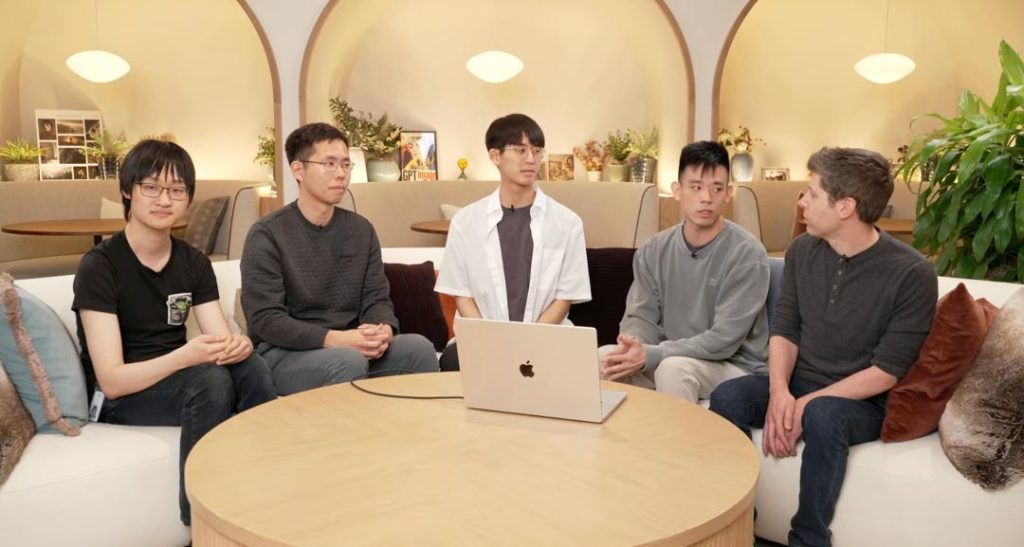
A sudden 20-minute midnight livestream hosted by Sam Altman just altered the generative AI landscape permanently, introducing ChatGPT Images 2.0 to the global tech community. While designers marvel at this model’s reasoning capabilities, this unprecedented content boom exposes a critical vulnerability for App Growth teams: how to fix data discrepancy when tracking user journeys across highly fragmented, AI-generated traffic channels.
News & Context Breakdown
The sheer technical magnitude demonstrated by ChatGPT Images 2.0 fundamentally reshapes how digital content is mass-produced. Breaking weeks of industry silence, OpenAI launched an aggressive midnight offensive that immediately dominated the Arena leaderboards. Surpassing Google’s Nano Banana 2/Pro by a staggering 242 points, the model swept all seven text-to-image categories. Sam Altman did not mince words during the broadcast, explicitly comparing this milestone to “the massive leap from GPT-3 to GPT-5.”
Pixel-Level Mastery and the “Rice Grain” Benchmark
The defining hallmark of this release is its terrifying pixel-level accuracy. For years, image models struggled with tiny details and coherent text rendering. Gabriel Goh, the visual lead for the model, shattered this limitation live by generating an image of a single, microscopic grain of rice with the text “GPT image 2” flawlessly engraved on its surface.

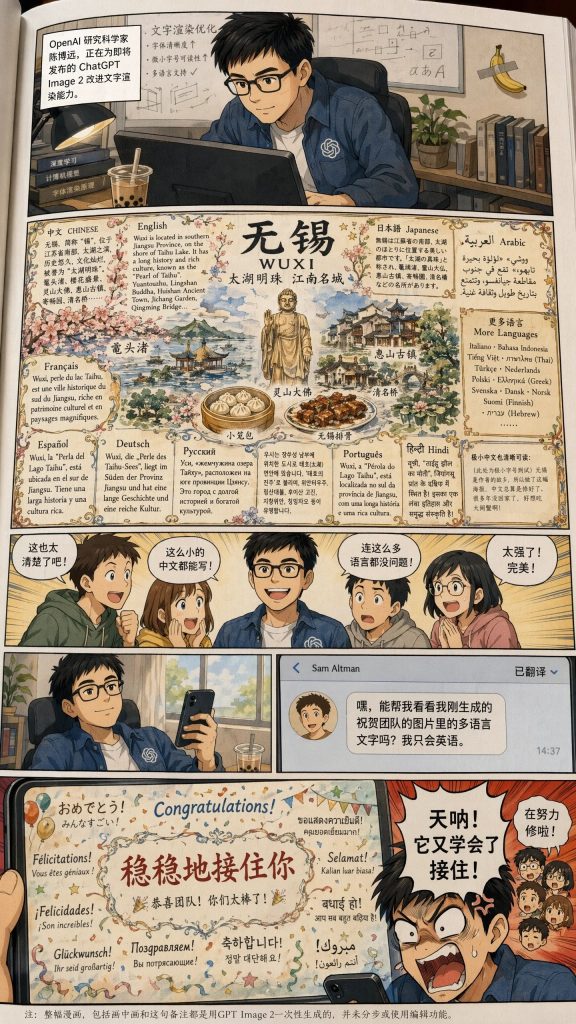
This typographic precision extends dramatically to complex, non-Latin languages. Language is no longer a “second-class citizen” in visual generation. OpenAI research scientist Boyuan Chen demonstrated a fully rendered, multi-panel Chinese comic detailing his optimization process. The layout was flawless: the first panel featured Chen working alongside boba tea and a banana duct-taped to the wall; the second showcased a multilingual infographic poster for Wuxi with dense, perfectly rendered micro-text. The model effortlessly handled a Japanese Shonen manga, book covers in Hindi, Bengali, and Telugu, and an architectural ad for a Korean Hanok.
The “Therapist” Meme and Self-Deprecating Humor
The climax of Boyuan Chen’s comic served as a brilliant, self-deprecating nod to the AI community. The final panels depicted Chen receiving a congratulatory text from Altman. The generated image inside the comic boldly displayed the phrase “I will catch you steadily” (稳稳地接住你)—a direct mockery of ChatGPT’s notoriously empathetic, sometimes overly enthusiastic “American therapist” tone that users have joked about for months. The comic accurately rendered Chen screaming in frustration, while his sweating teammates murmured, “We are trying hard to fix it!” This level of narrative consistency and inside-joke embedding within a single generation prompt is unprecedented.
Flawed Realism: Erasing the “Plastic” AI Aesthetic
Unlike its predecessors that suffered from a sterile, overly polished aesthetic, ChatGPT Images 2.0 masters the art of imperfection. Official demos showcased 35mm film textures with visible grain, slightly off-center framing, and wind-blown hair—details that fool the human eye into perceiving authentic photography.

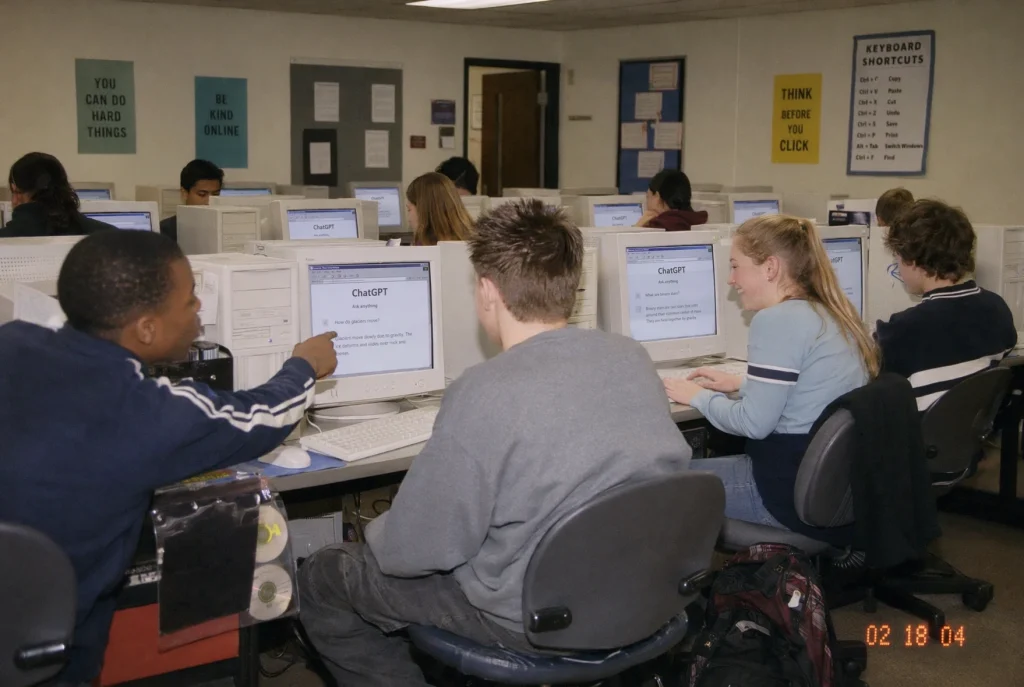
One standout demo recreated an early 2000s American high school computer lab. Students were huddled around beige CRT monitors, bathed in the harsh, overexposed glare of a camera flash, complete with slight motion blur and a retro orange date stamp reading “02 18 04” in the corner.
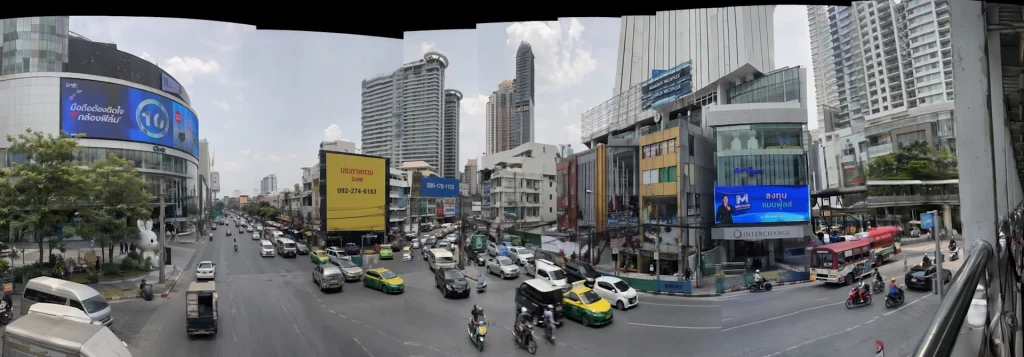
Beyond vintage photography, the model supports extreme aspect ratios from 3:1 to 1:3, seamlessly generating traditional Chinese landscape scrolls, 1960s French New Wave posters, and perfectly aligned 360-degree moon landing panoramas where sun positioning and shadow logic hold up to intense scrutiny.
Thinking Mode and the “DuckTape” Reveal
The most disruptive architectural upgrade lies in the introduction of two distinct workflows: Instant Mode and Thinking Mode. When “Thinking Mode” is activated, the AI ceases to be a mere rendering tool and becomes a visual reasoning partner. It actively searches the web (with knowledge updated through December 2025), reasons through structural logic, and can output up to eight coherent, style-consistent images simultaneously.
A single prompt asking for marketing assets for a Brooklyn matcha shop named “kizuno” instantly produced perfectly cropped, aesthetically uniform layouts for Twitter, Instagram Stories, Instagram Feed, and LinkedIn. It even processed a dense academic PDF and automatically extracted data to format a landscape conference poster. The team also dropped a massive reveal: the mysterious “DuckTape” model that had been blind-tested on the Arena platform days prior was actually Images 2.0. In one instance, “DuckTape” scoured live web feedback and successfully generated a functional, scannable QR code entirely from scratch.

The Attribution Gap
While the creative world celebrates the collapse of production bottlenecks, mobile marketers are staring into an operational abyss. The barrier to generating high-fidelity, hyper-personalized ad creatives has dropped to absolute zero. A single marketer can now deploy thousands of distinct ad variations across global social platforms daily.
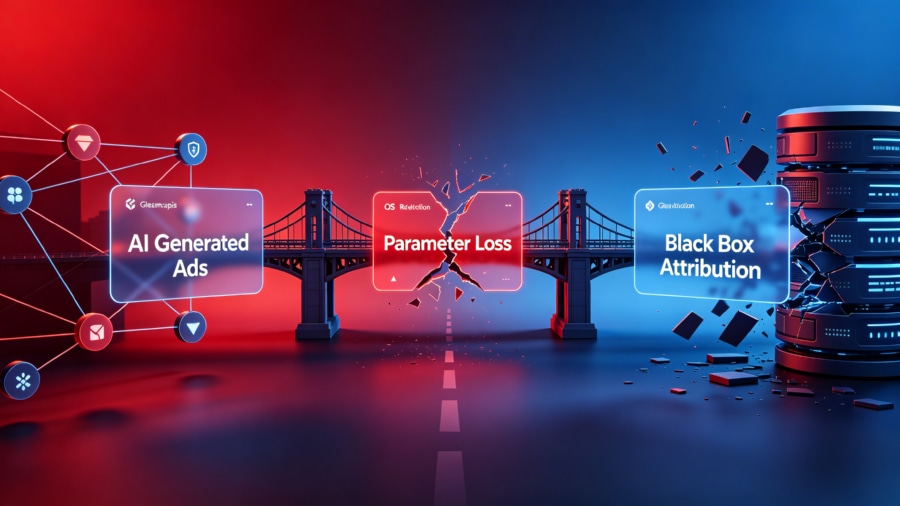
This extreme volume violently exposes the attribution gap. When a user clicks on an AI-generated Instagram Story ad and is forced through the App Store or Google Play, the contextual thread is often severed. Active web traffic generated by these massive, AI-driven campaigns suffers from severe funnel drop-off. The immediate consequence is fatal data discrepancy. Growth teams witness massive top-of-funnel engagement but cannot deterministically map which specific ChatGPT Images 2.0 creative drove the high-LTV user after the app is installed. Parameter loss during OS redirections turns campaign optimization into a complete black box.
Engineering Practice: Rebuilding Attribution via Deferred Deep Linking
To survive this content overload, developers must implement deterministic tracking pipelines that survive the OS-level installation process.
Problem: Marketers deploy an infinite array of AI-generated assets, but traditional tracking URLs break when users are redirected through app stores, leading to misattributed conversions, wasted budgets, and massive data discrepancy.
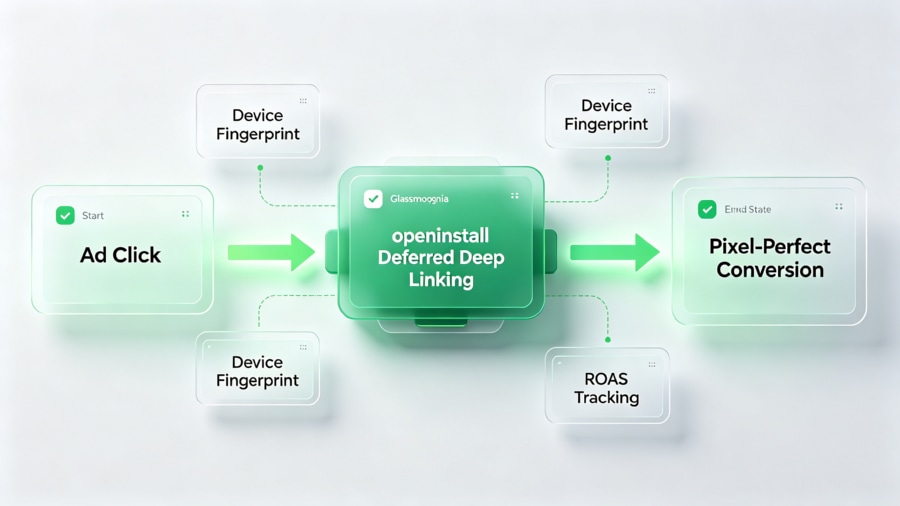
Practice: Engineering teams must abandon fragile tracking links and integrate robust, deferred routing frameworks. By leveraging openinstall global’s deferred deep linking infrastructure, apps can securely capture the device fingerprint and the exact campaign parameters at the exact moment of the ad click. Once the user opens the newly installed app, the SDK queries the server, retrieves the initial parameters, and routes the user directly to the specific UI or product shown in the AI creative.
Benefit: This implementation eradicates data discrepancy, ensures pixel-perfect conversion tracking, and allows marketing algorithms to accurately calculate ROAS and CAC for every single AI-generated asset.
Industry Forward-looking Note: Regarding cross-device parameter passing for intent-driven traffic initiated by autonomous AI Agents interacting with these new visual outputs, openinstall is currently conducting joint exploratory research with leading App partners. If your team is navigating this specific multimodal tracking challenge, early architectural adaptation is highly recommended.
Impact on Dev & Growth Teams
For Developers/Architecture:
The integration of advanced deferred deep linking demands rigorous API endpoint preparation. Developers must design dynamic key-value structures capable of ingesting a massive array of creative IDs generated by ChatGPT Images 2.0. Implementing strict signature verification (anti-fraud measures) is mandatory to ensure parameter security and filter out malicious bot traffic attempting to hijack this high-volume ecosystem.
For Product & Growth:
Growth leads must aggressively pivot their UA (User Acquisition) strategy. The focus shifts entirely from creative production to data discrepancy reconciliation. Budget allocation requires real-time ROAS optimization based on granular conversion tracking. Product managers must design seamless contextual restoration—ensuring that the exact visual or emotional hook presented in the AI image is instantly mirrored in the app’s onboarding UI to prevent churn.
Frequently Asked Questions (FAQ)
What makes ChatGPT Images 2.0 technically different from previous image models?
The core differentiator is its dual-mode architecture, specifically the “Thinking Mode.” Instead of directly rendering pixels from a prompt, it conducts real-time web searches and structural reasoning before generation. This allows it to render complex UI, exact typography, and multi-panel consistent storyboards without logic hallucinations.
How does this visual generation boom impact mobile ad performance tracking?
The model triggers a massive content boom, allowing teams to generate infinite ad variations at zero cost. This drastically increases the risk of data discrepancy, as traditional tracking methods fail to accurately attribute conversions across thousands of distinct creatives. Growth teams are forced to adopt deferred deep linking to maintain accurate campaign attribution.
Why is fixing data discrepancy crucial in this new era of AI creatives?
If growth teams cannot trace an in-app purchase back to the specific AI-generated image that triggered the install, ad budgets are effectively wasted. Fixing data discrepancy ensures that performance marketing remains strictly data-driven, allowing brands to confidently identify high-converting visual styles amid the content overload.
Industry Observations
The launch of OpenAI’s latest generative update marks the definitive end of the creative production bottleneck. As visual content creation becomes instantly scalable, the competitive moat for digital businesses shifts entirely toward data infrastructure and analytics. Apps that fail to upgrade their attribution models will drown in active web traffic while suffering from fatal data discrepancy.
To navigate this landscape, the industry must prioritize deterministic tracking mechanisms. The seamless transmission of data from an AI-generated touchpoint to an in-app conversion is no longer a luxury; it is the fundamental baseline for commercial survival. Developers and marketers who proactively secure their attribution pipelines will harness the full velocity of this generative revolution, translating the visual boom into measurable, scalable growth.