
Google Redefines Search Box? This structural paradigm shift has been conclusively validated by recent algorithmic overhauls at the I/O 2026 developer conference, where generative AI officially dismantled legacy click paths. During the keynote presentation, Alphabet showcased a massive redesign of its flagship gateway, transforming the classic white bar into a multi-modal conversational hub. For global development teams, this extreme multi-device transformation triggers an immediate routing crisis. Crucially, as AI agents resolve consumer queries directly within the interface, native applications risk becoming completely isolated from their organic discovery pipelines. Consequently, mastering deep integration is no longer optional to counter this massive distribution shift.
News & Context Breakdown: How Google Redefines Search Box
The sudden transformation of the internet’s primary entry point represents a colossal pivot in digital discovery. The standalone keyword interface is effectively dead. Instead, deep multi-modal context processing has completely absorbed traditional search behaviors.
Immersive Conversations as Google Redefines Search Box
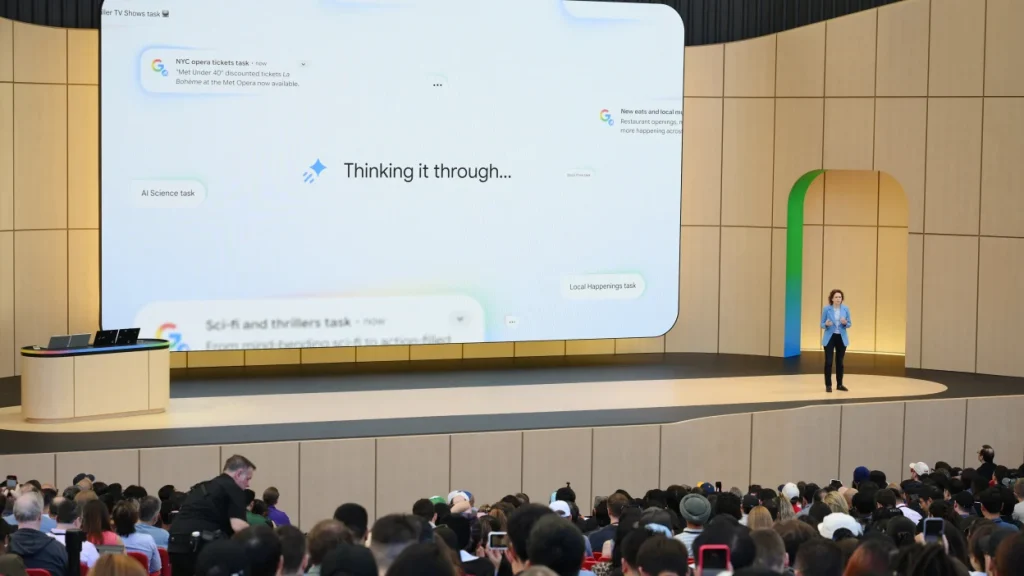
At the annual I/O event, Google vice president and head of Search Liz Reid introduced the complete retirement of the 25-year-old text box as Google Redefines Search Box permanently. For a quarter-century, a slender white rectangle and a blinking cursor governed human curiosity. The new design dynamically expands to accommodate long, complex conversational inputs. Furthermore, it directly supports text, images, PDFs, videos, and drag-and-drop elements from open Chrome tabs. Rather than predicting individual words, an AI-powered suggestion framework actively coaches consumers to formulate nuanced questions that extract the best performance from conversational large language models. Detailed live metrics are available via the official Google Search enhancements.
Architectural Unification: Merging AI Overviews and AI Mode
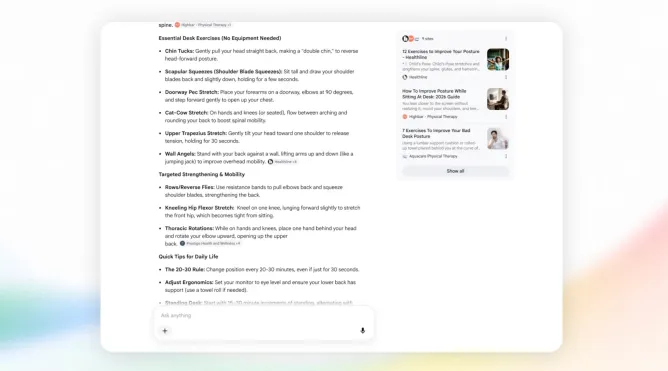
Behind the visual interface lies a massive structural reconfiguration. Google is completely unifying its AI Overviews with the immersive, conversational AI Mode launched last year. This combined architecture is rolling out immediately to desktop and mobile environments worldwide. Consumers receive automated summaries alongside standard ranked items. Concurrently, they can dive straight into a back-and-forth dialogue without navigating away to a separate interface. Reid highlighted that mainstream audiences reject the friction of choosing between a traditional page and an AI-forward workspace. They simply want immediate answers at their primary entry point.
Staggering Adoption and the Infrastructure Capital Frenzy
The scale of this behavioral migration is immense. OpenAI’s mobile app expansions are facing fierce competition, as Google’s AI Mode surpassed one billion monthly active users within its first year. Remarkably, query volume inside this conversational framework has been doubling every single quarter. Meanwhile, lighter AI Overviews now reach more than 2.5 billion monthly individuals. To maintain instantaneous response times across billions of multi-modal streams, Alphabet upgraded the backend to its newest Gemini 3.5 Flash model. Output generation runs four times faster than comparable systems, placing the model in a league of its own on the global intelligence-to-speed index. Supporting this colossal infrastructure requires breathtaking investments. Alphabet projects its 2026 capital expenditures to reach between $180 billion and $190 billion, a massive six-fold explosion compared to outlays just four years ago.

Generative UI and the Threat of the Autonomous Agent
Gemini 3.5 Flash also drives a breakthrough feature called Generative UI, scheduled for a free rollout this summer. Instead of extracting text, search will compile real-time code to build custom interactive visualizations, widgets, and mini-applications tailored to specific prompts. Furthermore, consumers can utilize the Antigravity development platform to build stateful, ongoing project spaces like workout trackers or vacation planners using basic natural language commands. For long-term tasks, Google is releasing proactive information agents. These automated systems track financial markets or real estate platforms 24/7 based on custom parameters, delivering synthesized updates and completely bypassing merchant homepages. This pivot toward background autonomy directly challenges viral developer ecosystems like OpenClaw, which shook Silicon Valley earlier this year with its unprompted programmatic execution models.
The Attribution Crisis: Surviving the Shift as Google Redefines Search Box
This transition from ranked blue links to a self-contained execution environment alters the entire structure of the user journey. Historically, mobile applications relied heavily on active web traffic driven by predictable discovery funnels. Consumers entered shorthand terms, clicked on mobile web links, and seamlessly transitioned into native environments via standard routing.
When Google Redefines Search Box into an omniscient layer, this linear pipeline breaks down completely. Users remain locked inside the search interface while background information agents handle downstream web exploration. Specifically, when an autonomous conversational agent routes a purchase or sign-up task directly into a target system, traditional tracking tokens vanish. Growth teams suffer extreme parameter loss during these automated handoffs. The lack of direct human screen interaction creates a massive data discrepancy, leaving developers completely blind to their true campaign ROI and customer acquisition origins.

Engineering Practice: Restructuring Deep Links After Google Redefines Search Box
To bypass the data black holes created by autonomous agentic ecosystems, modern development teams must reconstruct their core connectivity.
Preserving Intent with Deep Link Integration
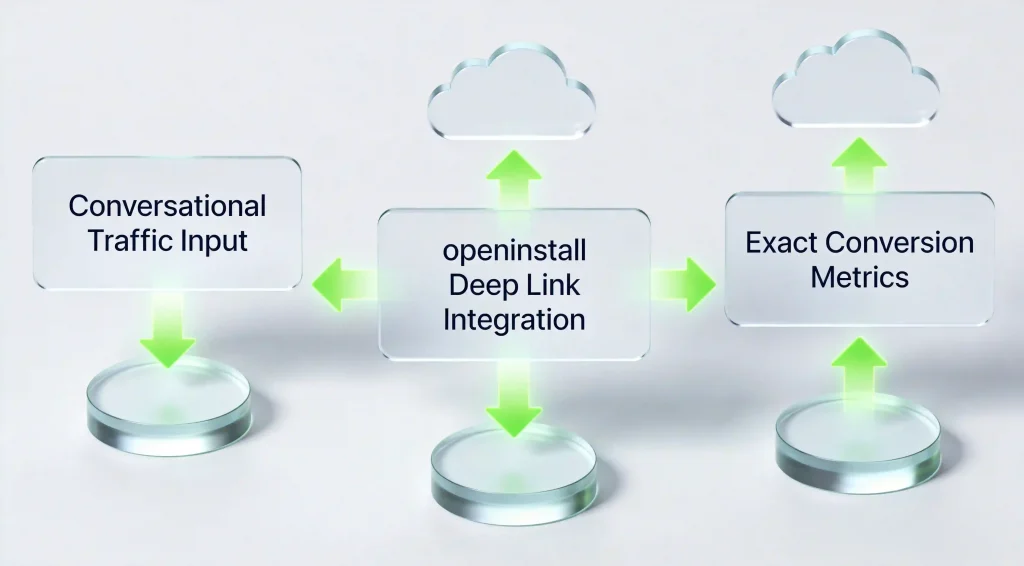
Engineers must implement a robust Deep Link and Universal Links architecture to capture agent-initiated parameters. By mapping contextual intent directly into cross-platform execution schemas, applications can bypass traditional browser limitations. Consequently, when an information agent triggers a native app process, the application automatically extracts the source tracking parameters. This completely eliminates the gaps caused by decentralized query routing, ensuring exact calculation of mobile conversion metrics.
Contextual Restoration for Conversational Traffic
Development leads must leverage advanced parameter-passing layers to ensure smooth onboarding flows. Specifically, when an agent transfers a user across devices, the app must utilize stateful matching engines to reconstruct the precise interaction history. This keeps the user journey unified, driving immediate engagement while defending against fragmented data streams.
Industry Forward-looking Note: Regarding cross-device parameter passing for autonomous intent traffic generated by multi-modal operating systems, openinstall’s tech lab is currently conducting joint exploratory research with leading global mobile platform partners.
Impact on Dev & Growth Teams: Adapting to the Google Redefines Search Box Framework
Technical Architecture Adaptations
Engineers must prepare endpoints for unstructured, dynamic data payloads. Because conversational queries deliver hyper-specific parameter arrays, the application architecture must employ flexible ID resolution mappings. Furthermore, security teams must deploy strict signature verification routines. This prevents malicious automated agents from launching fraudulent API requests and compromising conversion tracking pipelines.
Strategy Readjustments for Product Managers
Growth leads must rapidly abandon classic keyword-stuffing mentalities. As conversational search prioritizes semantic alignment over raw matching, optimization models must change. Budgets must pivot toward rewarding deep contextual authority. Product leads must focus on real-time ROAS optimization, ensuring that non-linear touchpoints are fully captured to preserve data integrity across the mobile ecosystem.
Frequently Asked Questions (FAQ): Mastering the Era Since Google Redefines Search Box
How does Gemini 3.5 Flash scale conversational search parameters?
Gemini 3.5 Flash serves as the high-throughput engine for real-time code generation. It operates four times faster than legacy frontier models. This allows the system to build custom widgets instantly without stalling the global user journey.
How does analytics tracking evolve after Google Redefines Search Box?
Tracking shifts entirely from monitoring upfront web clicks to capturing deep intent parameters transferred by conversational layers. Developers must utilize deferred execution frameworks to preserve campaign context across detached user journeys.
Why do automated information agents trigger severe data discrepancies for digital analytics?
These agents traverse the web and complete downstream transactions completely hidden from the consumer UI. Traditional tracking tokens are stripped during this machine-to-machine exchange. As a result, standard tools fail to attribute conversions back to the original source.
Industry Observations: Strategic Realities After Google Redefines Search Box
The strategic decision to replace the standard keyword input field signals a profound realignment of international digital power. Standalone search platforms are quickly evolving into highly consolidated execution engines. As massive conglomerates absorb multi-modal interfaces, the traditional boundary between web browsing and app usage dissolves.
Software engineers and growth experts must immediately optimize their underlying telemetry and deep routing systems. In an era dominated by autonomous intelligent agents, continuing to rely on legacy, browser-based single-direction click funnels is tantamount to absolute stagnation. Only enterprises that establish robust parameter continuity across platforms will maintain visibility within the algorithmic overhauls of intelligent engines. Embracing resilient deep linking technologies is the definitive path forward to capture organic traffic value within an entirely centralized digital landscape.