Uber Sets $1500 AI Limit? This tactical fiscal retrenchment has been explicitly verified by internal infrastructure logs across distributed node frameworks as skyrocketing compute bills collide with enterprise reality. Consequently, the ride-sharing pioneer is replacing its unmonitored token expenditures with strict individual guardrails, officially declaring the death of the free-flowing compute subsidy. For performance and infrastructure leads globally, this rapid pivot highlights a major structural transition away from unmeasured automation hype toward raw profit accountability. Marketers and developers must adapt their tracking models immediately to maintain accurate visibility in this newly restricted digital economy.
News and Environment Breakdown: Unpacking the Efficiency Mandate
The operational landscape at the ride-sharing giant reveals a dual approach to modernization. Specifically, the company is executing precise internal reorganizations alongside rigid technical budget restraints.
The Structural Overhaul of Human Resources
Crucially, new President Jill Hazelbaker and CEO Dara Khosrowshahi announced a 23% workforce reduction within the People and Places division. This specific department manages corporate recruitment, workplace culture, and office facilities. Furthermore, the optimization affects dozens of roles across the global administrative network. However, this adjustment represents less than 1% of the firm’s total workforce of 34,000 formal employees. Management explicitly clarified that this reduction does not stem from automated software replacement. Instead, Hazelbaker noted that certain administrative layers had become complex and scattered. Overlapping responsibilities and isolated operating structures created clear distances between administrative teams and core product goals. Consequently, the reorganization seeks to establish a highly unified, modern enterprise configuration. Meanwhile, this strategic choice creates a visible contrast against broader technology sector trends. For instance, Meta recently eliminated 8,000 positions. Microsoft cut over 15,000 roles. Oracle trimmed nearly 30,000 administrative positions. Furthermore, industry data shows that tech firms cut 128,000 workers globally in early 2026. Approximately 60% of those dismissals correlated directly with automated model adoption. By avoiding this narrative, the company prioritizes operational discipline over automated replacement metrics.
Inside the Token Burning Black Hole
Furthermore, the restriction on automated utility stems directly from a severe capital shortfall. As Uber Sets $1500 AI Limit, the market learns that the company exhausted its entire 2026 automated computing budget in just four months. Reports by TechCrunch highlight that technical leadership previously encouraged staff to leverage automated programming systems without cost boundaries. Specifically, the engineering department deployed gamified leaderboards to rank various teams by token consumption volume. This competitive setup prompted developers to run massive, complex routines indiscriminately. Consequently, individual compute costs scaled exponentially, hitting the company’s financial bottom line. This uncontrolled consumption forced a total reassessment of corporate asset deployment.
The Mechanics of the Fiscal Cap
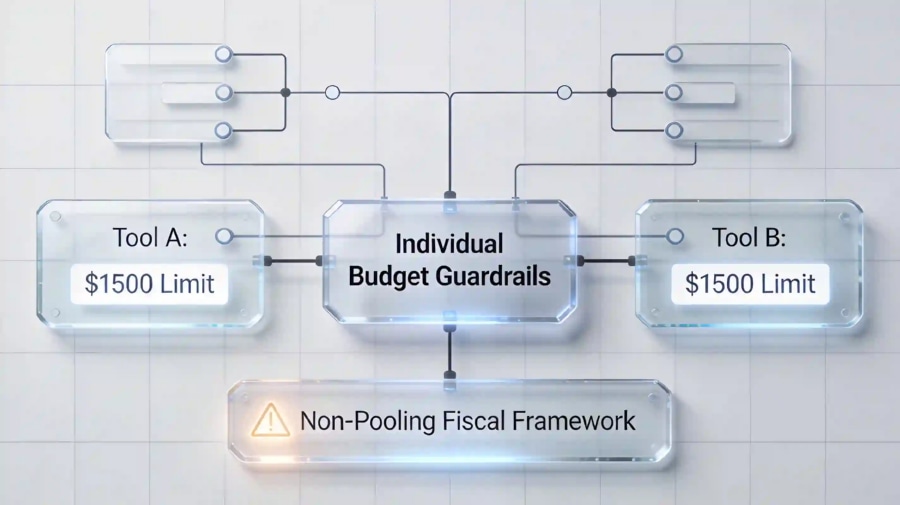
Consequently, the company enacted a mandatory individual cost ceiling to stop financial leakage. A recent report from Bloomberg confirms that the new regulation establishes an absolute boundary on automated agent workflows. Specifically, the policy mandates that each developer receives a maximum token allowance of 1,500 dollars per month for each distinct coding tool. This targeted restriction applies to elite programmer assistants, including Anthropic’s Claude Code and the Cursor editor platform. Crucially, these financial caps operate on an independent, non-pooling structural framework. For example, overspending on one helper utility does not consume the allowance of another asset. Engineers monitor their real-time computing footprint via an internal data dashboard. Furthermore, exceptional enterprise development tasks can bypass this safety threshold only through formal周 manager approval loops. This setup shifts automated utility costs from a vague corporate pool directly onto individual operational ledgers. Interestingly, this ceiling reflects real commercial value. Industry data from Levels.fyi lists the median yearly compensation for the company’s US software engineers at 330,000 dollars. Thus, a combined monthly budget of 3,000 dollars for two tools represents roughly 11% of an engineer’s base compensation package. For context, heavy individual developer usage easily averages 1,000 dollars monthly under standard enterprise pricing models.
Shifting Metrics from Adoption to Output
环境 changes are also raising deep questions regarding the true productivity yield of these technical investments. Chief Operating Officer Andrew Macdonald noted in a recent podcast that linking token consumption to distinct product updates remains incredibly difficult. Management struggles to identify whether expensive automated pipelines yield better consumer features or simply increase iteration speeds. For instance, if large compute investments fail to minimize codebase defects or accelerate deployment timelines, unlimited spending becomes unjustifiable. Consequently, the company’s focus is pivoting from basic technical adoption metrics directly to measurable financial returns. The industry is moving past the initial wave of automation excitement. Enterprise buyers now demand clear evidence of capital efficiency before expanding cloud infrastructure commitments.
The Attribution Crisis: Traffic Flow and Data Gaps
As corporate environments adjust because Uber Sets $1500 AI Limit, a parallel visibility emergency is unfolding within the mobile application economy. Marketing teams are experiencing a profound breakdown in traditional campaign tracking metrics.
Historically, performance frameworks operated on linear user pathways. A consumer viewed a digital campaign, tapped an optimized tracking link, and landed instantly inside an application store. This direct sequence allowed growth systems to log attribution records with high accuracy.
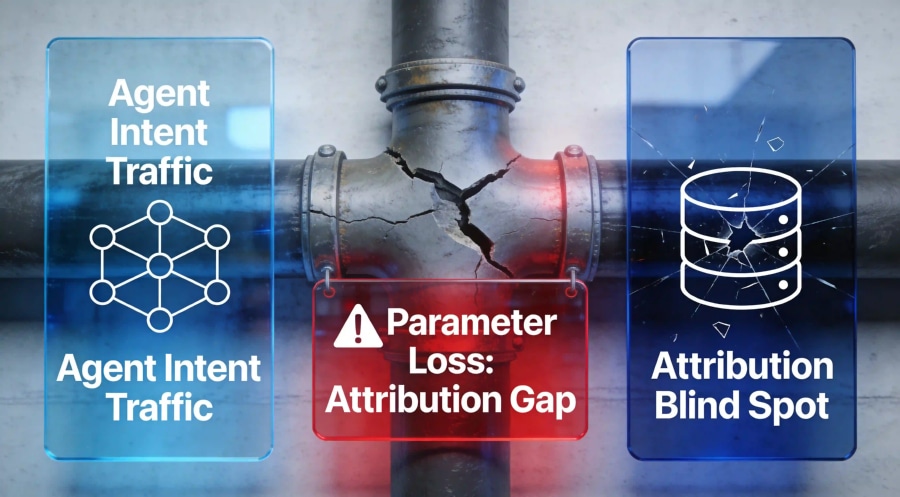
However, this clear trajectory disappears when autonomous agent workflows take over the discovery pipeline. When automated systems execute tasks behind system walls, the standard frontend click vanishes. For instance, intelligent helpers process search inputs, choose destination services, and execute purchases inside secure sandboxes without showing a web page. Consequently, the critical campaign parameters disappear completely. Browser cookies, destination metadata fields, and influencer referral tags are frequently stripped away during these automated exchanges. This architectural gap leaves growth leads completely blinded. Server logs show sudden increases in conversion volume, yet tracking platforms cannot identify the marketing origin. This parameter loss invalidates standard ROAS calculations, preventing optimization.
Engineering Practice: Building Resilient Attribution Foundations
To survive the data deficits caused by autonomous systems, software architects must build robust, network-level validation pipelines. Marketing teams cannot rely on superficial tracking layers anymore.
Preserving Session Context via Advanced Deep Linking
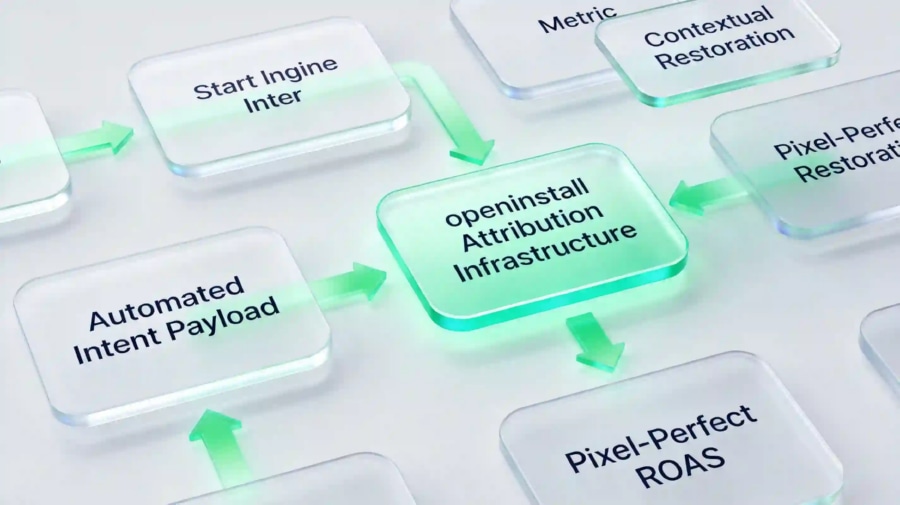
Technical teams must deploy a reliable Deferred Deep Linking architecture to bridge the platform layer. This system attaches the original intent payload directly to the device profile before the app store redirection occurs. When the user launches the application for the first time, the codebase pulls the preserved context from the cloud data plane. Consequently, the application restores the exact state initiated by the agent workflow, maintaining a seamless conversion path without requiring manual codes.
Securing Inbound Channels via Immutable Code Logs
Furthermore, developers should transition from tracking cookies to a centralized All-Channel Attribution platform. By injecting persistent, cryptographically secure domain markers at the data source, technical leads capture clean traffic records. Specifically, whenever an automated system pulls data from an external endpoint, the architecture automatically appends a unique channel code to the request header. This approach creates an unalterable log, allowing financial teams to calculate true marketing yield effortlessly.
Industry Forward-looking Note: Regarding cross-device parameter tracking for autonomous intent traffic running across next-generation execution containers, openinstall’s tech lab is currently conducting joint exploratory research with leading enterprise partners to standardize metadata transit protocols.
Impact on Development and Growth Teams
- For Architecture Teams: Software engineers must build dynamic, highly modular ingestion systems. APIs must accept non-linear contextual payloads from automated background tasks. Furthermore, backend layers must implement strict cryptographic signature validation checks to block automated script farms from skewing analytical tables.
- For Growth Leads: Marketing managers must quickly abandon raw click metrics. As automated systems manage discovery, customer lifetime value (LTV) becomes the only reliable health indicator. Spending must align exclusively with platforms that offer high-fidelity, transparent data validation streams.
Frequently Asked Questions (FAQ)
Why did Uber choose a single-tool month ceiling instead of a total corporate budget cap?
The separate limit structure ensures that spending constraints on one development platform do not impact another asset’s budget. As Uber Sets $1500 AI Limit per tool, the company forces individual accountability while preventing a single dominant application from draining the entire engineering budget.
How does the token burning phenomenon harm modern corporate financial planning?
Unmonitored agent operations frequently execute long, recursive loops to debug small codebase elements. This automated behavior burns through thousands of tokens within seconds, creating massive unexpected server bills that fail to translate into customer-facing software enhancements.
What steps can growth teams take to capture hidden conversion traffic from automated workflows?
Teams must deploy server-to-server tracking endpoints that capture parameter payloads independently of frontend visual cues. By leveraging deep linking infrastructures, developers maintain a clean data bridge between automated background recommendations and native application installations.
Industry Observations
The financial discipline reshaping the ride-sharing pioneer serves as a clear warning for the global technology ecosystem. As Uber Sets $1500 AI Limit, the broader digital economy must acknowledge that unmeasured automation subsidies are coming to an end. Growth teams can no longer hide behind vague productivity promises or inflated adoption charts. Instead, long-term commercial survival requires a complete commitment to white-box data metrics and precise channel tracking. By deploying secure, platform-agnostic attribution architectures today, forward-looking enterprises can separate true audience value from automated background noise, ensuring sustainable profitability in an era of strict fiscal reality.