Anthropic Releases Claude Tag? This strategic pivot has been conclusively validated as the AI startup officially launches its multiplayer workspace automation on June 23, 2026. Specifically, the introduction of this flagship collaborative model redefines developer workspaces inside Slack channels. Consequently, this always-on virtual coworker drives massive change in team operations. For developer teams, the immediate challenge is managing collaborative chat flows while preserving secure context and parameter integration. Crucially, the introduction of the Claude Tag update marks a significant milestone in collaborative enterprise environments.
Deciphering Anthropic’s Collaborative Frontier: Claude Tag and the Rise of Multiplayer Agency
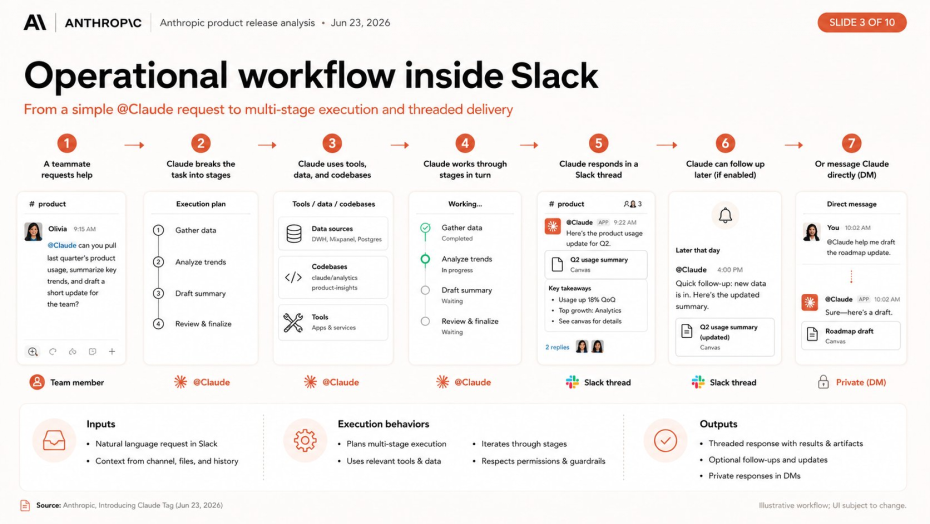
During the official release on June 23, 2026, Anthropic launched its new enterprise-focused capabilities. Specifically, when a team member deploys Claude Tag within Slack, the model functions as an active virtual coworker. Furthermore, this update marks a major shift in how organizations integrate generative artificial intelligence. Consequently, this shift explains why Claude Tag has quickly become a core productivity driver. Meanwhile, the browser-based integration enables administrators to connect the model to proprietary tools and codebases. For instance, teams can delegate complex tasks directly inside their primary chat channels. Detailed setup steps are outlined on the official Docs Page and the Product Page.
Slack Integration and the Opus 4.8 Architecture
Specifically, the system runs on the newly upgraded Opus 4.8 model layer. Furthermore, according to product head Cat Wu, Claude Tag is uniquely multiplayer. Consequently, multiple team members can view the model’s progress and steer its execution. Meanwhile, this multiplayer setup prevents isolated information silos. For example, any employee can join the active thread and build upon the previous user’s instructions. As a result, this collaborative layout makes working with artificial intelligence feel like interacting with a real human colleague.
The Multi-Turn Memory Layer and Adaptive Context
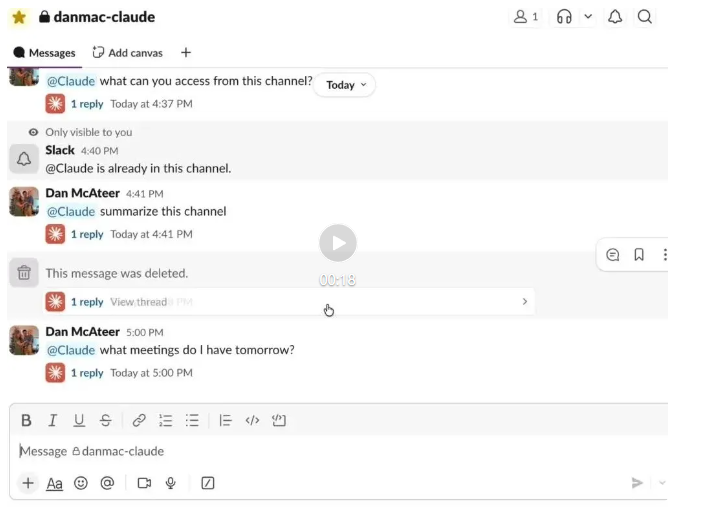
Furthermore, the model builds a rich repository of context as it follows channel discussions. Specifically, the launch of Claude Tag eliminates the information silos of single-user chats. Consequently, because Claude Tag operates directly inside collaborative channels, it continuously ingests context. Meanwhile, users do not need to re-explain project backgrounds for every new task. For instance, the model remembers previous code reviews, support tickets, and system logs. Crucially, this persistent memory remains strictly partitioned according to the channel settings.
The Ramp May AI Index 2026 Metrics and Commercial Gains
To evaluate its commercial impact, industry researchers analyzed recent corporate spending patterns. Specifically, the Ramp May AI Index 2026 shows Anthropic leading business adoption for the first time. For example, Anthropic secured a 34.4% adoption rate among U.S. enterprises, surpassing OpenAI’s 32.3%. Furthermore, the internal deployments at Anthropic yield incredible metrics. Crucially, 65% of the company’s product team code is now generated by their internal version of the model. Consequently, computer scientist Andrej Karpathy described this launch as the third major revolution in LLM user interfaces.
The Disruption of Siloed Workspaces: How Always-On Virtual Coworkers Redefine Conversational Flows
As corporate chat systems become the primary hub for task execution, traditional web interfaces are sidelined. Specifically, the massive volume of background API transactions bypasses the standard desktop browser. Consequently, this transition triggers a severe campaign attribution crisis. Meanwhile, because operations occur within secure chat channels, external tracking links fail. For application developers, this behavioral shift results in a severe data blackout across user acquisition funnels.
Ambient Behaviors and the Breakdown of Traditional Interactive Bridges
For instance, when an agent autonomously resolves a customer support ticket, the user remains inside the chat. Consequently, the customer never visits the brand’s external portal or downloads the native application. Furthermore, because these actions run in background threads, standard web cookies cannot capture the session. As a result, marketers experience massive data discrepancy, making it impossible to evaluate organic campaign ROI. Crucially, this friction demands a completely new approach to parameter mapping.
The Conversion Gap in Decentralized Chat Flows
Meanwhile, the rise of automated team tasks introduces severe ad fraud vulnerabilities. Specifically, because agents can execute tasks in parallel, malicious botnets can simulate high-frequency user interactions. For example, automated scripts can leverage low-cost API calls to fabricate installations and trigger click injection. Consequently, traditional verification systems cannot easily distinguish between a human-initiated task and an automated script. As a result, developers face severe ad fraud risks, draining marketing budgets on non-existent traffic. Crucially, this vulnerability highlights the urgent need for a verified device fingerprinting system.
Reference Architectures & Engineering References: Establishing Decentralized Multi-Agent State Synchronization
To secure collaborative agent workflows and combat data discrepancies, software architects must implement standardized engineering safeguards. Specifically, we must adopt an “80/20” approach, where 80% of the architecture focuses on universal technical principles and 20% leverages proven tool standards. Furthermore, one of the most critical defensive measures is the deployment of secure, cross-platform intent filters. Consequently, when a transaction is completed in the browser, the server must initiate an instant, secure handshake to wake up the native application.
Constructing Token Spend Limits and Permission Control Planes
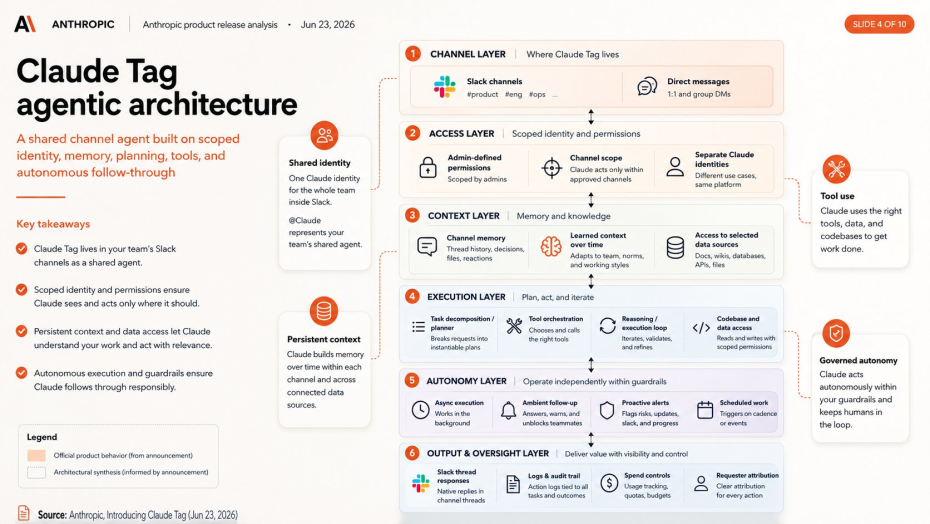
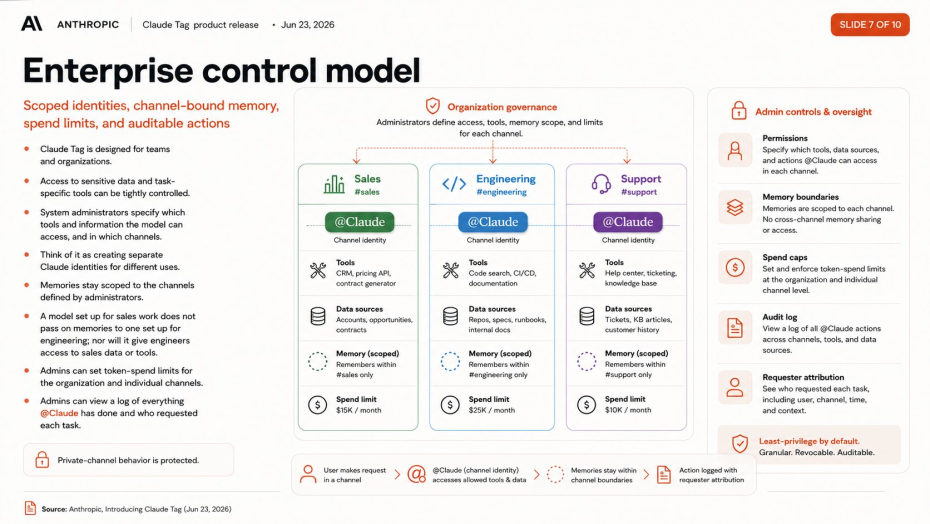
Specifically, deploying Claude Tag requires administrators to establish secure access control planes. Furthermore, administrators must isolate departmental memories to prevent data leakage between teams. Consequently, a model set up for the sales team cannot pass on memories to the engineering channel. Meanwhile, administrators can enforce strict spend limits at both the organizational and channel levels. For instance, this preventing autonomous agents from initiating infinite loop calls that drain computing resources. Crucially, all historical executions are logged in a central audit file.
Implementing Cryptographic Validation on Autonomous Webhooks
Furthermore, securing transmission links requires the enforcement of Cryptographic Signatures. Specifically, every transit URL and API callback must be signed using private key encryption. Consequently, this ensures that the session payload cannot be manipulated by intermediate proxy scripts. Meanwhile, when the application executes a handshake, the server verifies the signature to ensure authenticity. As a result, developers can confidently block spoofing attempts and maintain conversion tracking integrity. To avoid building these complex infrastructures manually, teams can deploy a deferred app parameter pass-through framework.
Aligning Engineering Nodes: Integrating Secure Multi-Agent Identifiers Across Slack Frameworks
Implementing advanced browser automation workflows requires close coordination between technical and marketing departments. Specifically, as Claude Tag automates complex tasks, developers must monitor external webhooks. Furthermore, when Claude Tag processes team requests, it generates valuable conversion touchpoints. Consequently, the engineering team must focus on standardizing unique identifiers and ensuring SDK compatibility. Meanwhile, technical architects must implement secure signature verification to prevent spoofing of the ios sdk and android sdk.
Technical Implementation for Developers and Architects
Specifically, developers must implement unified multi-platform identifiers across the android sdk and ios sdk. Furthermore, maintaining bundle id consistency is essential for cross-store routing. Consequently, when the app launches via custom url scheme or universal links, the context is restored immediately. Meanwhile, signature verification must run at the gateway level to prevent malicious script injection. As a result, the engineering team can guarantee high-quality raw data for downstream systems using a standardized universal linking architecture.
Campaign Optimization Under Privacy Restrictions
Meanwhile, the marketing and growth teams must adapt their customer acquisition strategies to leverage this new architecture. Specifically, growth leads must optimize their marketing analytics by matching campaign traffic with real-time attribution data using a multi-channel deterministic attribution engine. Furthermore, utilizing deferred deep linking allows the design of customized onboarding flows. Consequently, when a referred user launches the app, referral tracking automatically attributes the conversion. As a result, brands can calculate exact customer acquisition cost (cac) and return on ad spend (roas). Crucially, this precise attribution filters out invalid automated traffic.
Frequently Asked Questions (FAQ)
Does Claude Tag Require Continuous User Auditing?
Specifically, while Claude Tag operates autonomously, administrators can view complete audit logs. Furthermore, the central dashboard displays exactly who requested each task and which tools the model accessed. Consequently, this structural transparency ensures that companies maintain strict regulatory compliance. Meanwhile, administrators can instantly revoke tool access if they detect any abnormal behavior.
Why Does the Fact That Claude Tag Automates Slack Tasks Impact Acquisition Metrics?
Specifically, as Claude Tag takes over backend workflows, the traditional link-clicking funnel disappears. Furthermore, because users complete their administrative tasks directly within Slack, they have no reason to download native apps. Consequently, standard conversion tracking parameters are lost, leading to severe data discrepancy and attribution blackouts for mobile growth teams.
How Can Developers Secure External Connectors Integrated with Claude Tag?
Crucially, before connecting Claude Tag to proprietary codebases, developers must implement secure key validation. Specifically, the system must enforce strict role-based access control (RBAC) at the API gateway level. Furthermore, administrators should limit the model’s write permissions in production environments. Consequently, this prevent the model from executing unauthorized code changes during autonomous sessions.
Macro Technology Forecasts: The Demise of Direct Chat and the Shifting Landscape of Corporate Enterprise Software
The launch signifies a broader shift in the global technology landscape. Specifically, the traditional boundaries of operating systems and application distribution are beginning to dissolve. Furthermore, as intelligent agents and browser engines take over execution tasks, the primary interface for users will transition to highly automated, voice-enabled, or conversational layouts. Consequently, traditional app stores will lose their monopoly over discoverability. Meanwhile, the industry will witness a rapid rise in dynamically generated, single-purpose micro-applications designed for immediate tasks. As a result, the demand for instant, zero-friction distribution will escalate dramatically. Crucially, developers who fail to adapt their attribution and security layers to this new agentic paradigm will find themselves blind to their true traffic sources.
Furthermore, the consolidation of model intelligence within a few global giants will raise severe compliance walls. Specifically, data privacy frameworks like SKAdNetwork and Google Privacy Sandbox will continue to tighten data access. Consequently, developers must prioritize first-party, deterministic data collection over probabilistic tracking. Meanwhile, the integration of secure, multi-touch attribution standards will become the baseline for any technical architecture. As a result, the era where Claude Tag enters the enterprise workspace marks a fundamental shift, signaling the beginning of a completely new technical era. Crucially, organizations must rebuild their data pipelines today to remain competitive in this decentralized future.