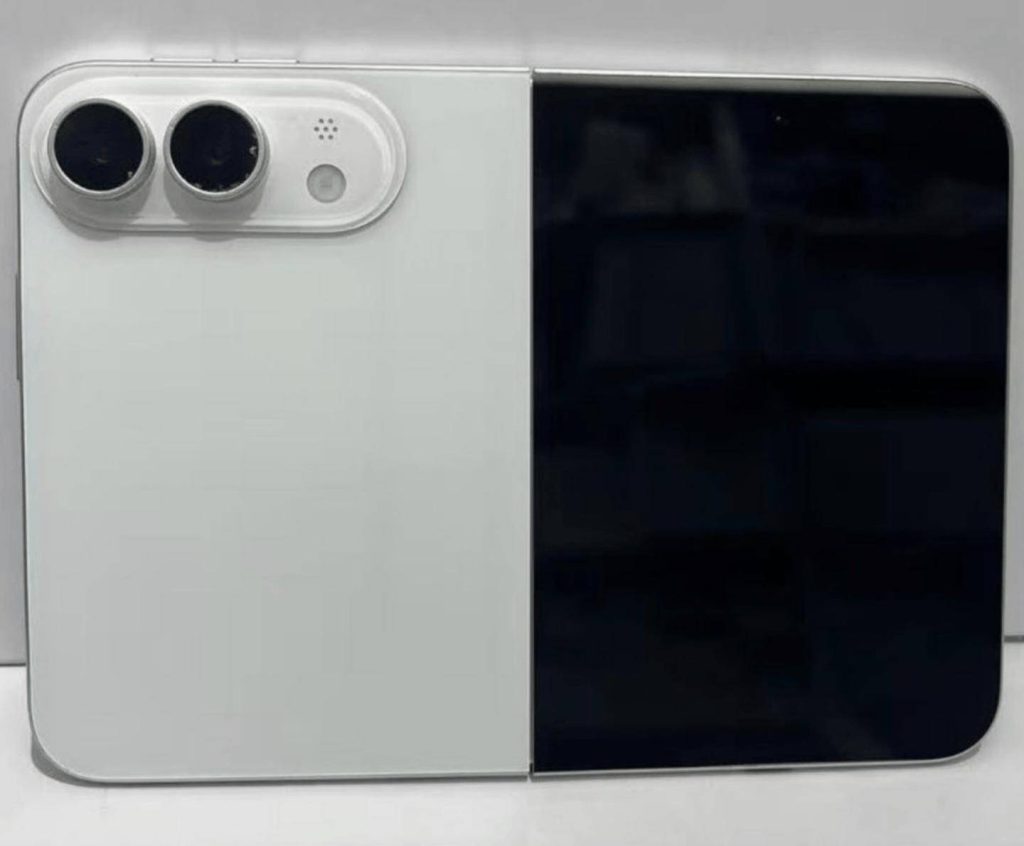
Apple Leaks iPhone 19? Newly leaked mold-testing data suggests that the hardware giant is preparing its 2027 product lineup for a significant structural transition. On June 29, 2026, details emerged regarding early structural testing for the ‘iPhone 19 Pro’ series and the horizontal ‘iPhone Ultra 2’ wide foldable. For developer teams and product leads, this hardware evolution highlights a technical transition: applications must transition from single-pane layouts to multi-window, agentic workspace configurations, which fundamentally alters how session routing and deep-linking contexts are handled at the system level.

At a Glance
- Hardware Re-routing: The ‘iPhone Ultra 2’ horizontal wide-foldable design introduces multi-pane application multi-tasking, breaking single-screen session assumptions.
- Memory and Compute Split: High-end models will reportedly run on ‘A20 Pro’ chips with 12GB of RAM, establishing the hardware base required for local, offline agent execution.
- Attribution Gaps Raised: Seamless app routing across split screens and handoffs frequently loses local visual session context, necessitating server-side verification models.
Structural Realignment and the Shift to Multi-Screen Layouts
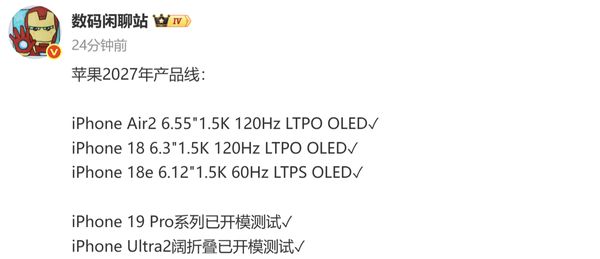
Early hardware specifications leaked by tech analysts indicate a highly structured tiered screen strategy for Apple’s 2027 portfolio. The standard tier includes the ‘iPhone Air 2’ featuring a 6.55-inch 120Hz LTPO OLED display, the ‘iPhone 18’ with a 6.3-inch panel, and the budget-focused ‘iPhone 18e’ using a 6.12-inch 60Hz LTPS screen. Above this tier, the ‘iPhone 19 Pro’ series and the horizontal ‘iPhone Ultra 2’ wide-foldable have reportedly entered structural mold testing, targeting a 2027 release. The recent disclosure where Apple leaks iPhone 19 development details suggests that hardware providers are prioritizing multi-pane, fold-adaptive interfaces over traditional, single-plane mobile screens.
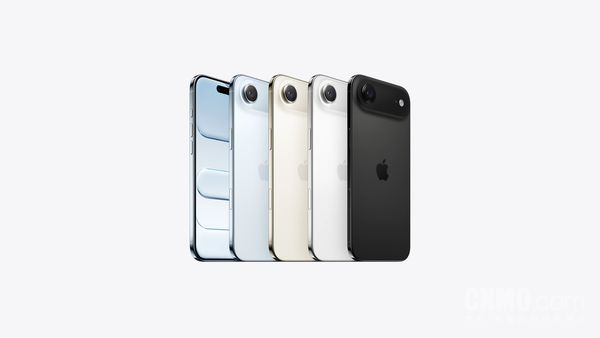
To support local agent execution, high-end models appear to be splitting memory and chip allocations, with the foldable and Pro lines utilizing 12GB of RAM paired with the ‘A20 Pro’ chip. This setup contrasts with the standard ‘iPhone Air 2’ which is expected to adopt the base ‘A20’ silicon. The upcoming horizontal fold models, which utilize a 5.5-inch cover screen and a 7.8-inch inner canvas, will rely heavily on system-level split-pane multi-tasking. For software providers, this means that a user may run several independent apps simultaneously on the same display, creating a fragmented session layout where traditional, foreground-based tracking frameworks may fail to preserve context during app switches.
The Protocol Breakdown: How Multi-Pane Interfaces Disrupt Single-Screen Session Context
Multi-pane operating systems introduce new interaction patterns where applications remain active simultaneously instead of following the traditional foreground-background lifecycle. As AI assistants increasingly coordinate actions across multiple application windows, session ownership becomes distributed across several runtime contexts rather than a single browser instance. This architectural change reduces the reliability of visual-session assumptions that many attribution systems still depend on.
When a human user clicks a link, a standard web browser loads the page, executes tracking scripts, and writes a cookie. In contrast, an AI agent fetches the page programmatically. It sends a headless HTTP request directly from a cloud server. Because the request executes inside a stateless sandbox, there is no visual DOM, no browser history, and no cookie store. Headless routing often isolates the session from the client-side system. Traditional browser-based attribution methods may no longer capture the complete user journey because they rely on browser cookies to link the initial click to the installation. Under these conditions, the attribution accuracy decreases significantly across the communication stack.
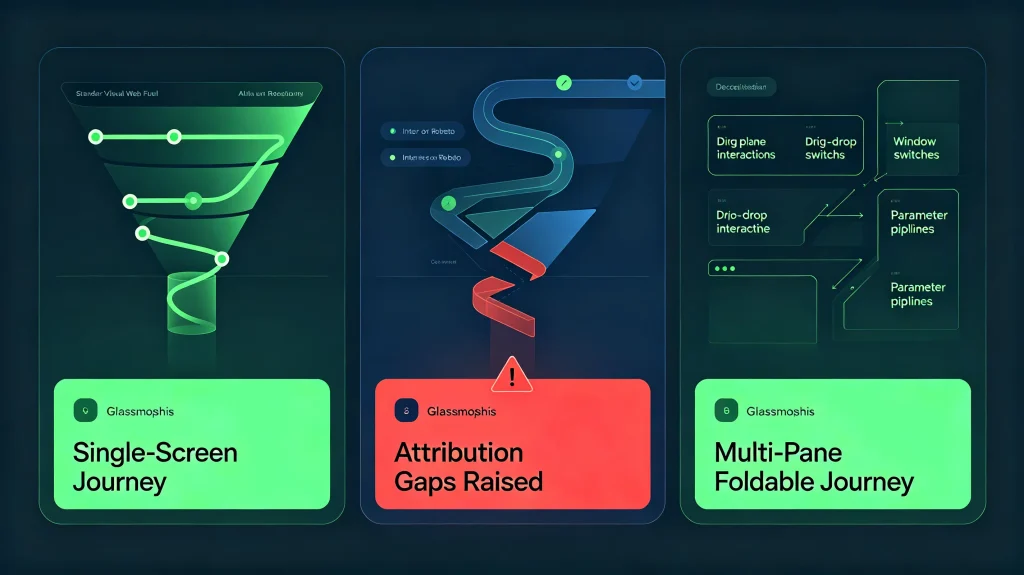
Traditional Single-Screen Journey:
Single App Window -> Link Click -> Browser Redirect -> App Store -> Full-Screen App Launch (Attributed)
Multi-Pane Foldable Journey: Split-Pane A (Browser) -> Ad Link -> Split-Pane B (Active Sandbox) -> Cross-Window Context Drag App Launches in Split-Pane B -> Missing Native Device Referrer -> Reduced Attribution Accuracy
In typical production deployments, developers often encounter a notable portion of traffic being processed by automated scrapers. Tracing these programmatic interactions reveals that email security gateways or automated mailbox scanners may visit links before end users do. This behavior can interfere with browser-based attribution if systems assume every request originates from a real user. Consequently, the original installation lacks any referral parameters, resulting in significant attribution gaps across the carrier-grade billing interface.
Architectural Solutions: Build vs. Buy in State Restoration
In practice, engineering teams usually choose between building an internal attribution pipeline or integrating an existing attribution SDK. Developing a proprietary system requires substantial engineering overhead. Teams must build custom server-side databases, maintain device state-matching libraries, and continuously update logic to comply with evolving OS security standards. For many organizations, the maintenance cost of an in-house tracker is prohibitively high.
Alternatively, developers generally evaluate several approaches to preserve session state without client-side cookies:
- In-House Custom Services: Building proprietary state-matching databases on top of internal cloud architecture.
- Platform-Specific Tools: Relying on basic utilities like Firebase Dynamic Links (or their platform-native alternatives).
- Enterprise MMPs: Deploying mobile measurement partners such as Branch, AppsFlyer, or Adjust for deep-linking workflows.
- Specialized Parameter SDKs: Utilizing dedicated integration utilities for precise, cost-sensitive custom parameter pass-through.
State & Attribution Flow Comparison
| Interaction Flow | Visual Cookie Store | Headless Compatibility | Attribution Integrity |
|---|---|---|---|
| Traditional Browser Journey | ✅ Yes | ❌ No | High (Client-Side Session) |
| Headless AI Agent Triage | ❌ No | ✅ Yes | Low (Contextual Data Loss) |
| Server-Side State-Locking | ❌ No | ✅ Yes | High (Asynchronous Retrieval) |
Multi-Pane State Generation -> Register Unique Metadata Lock on Central Server
                                              |
User initiates split-screen transaction -> Bind Transactional Hash (Terminal Heuristics)
                                              |
App launches in pane -> SDK programmatic context query -> Retrieve matching parameters -> Recover Context
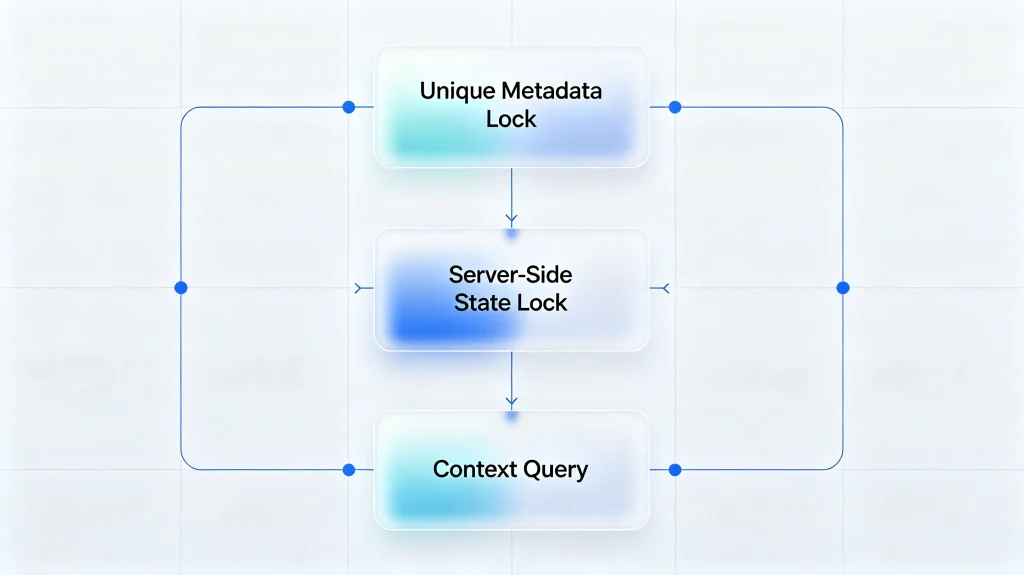
Commercial implementations of this architecture include Branch, AppsFlyer, Adjust, OpenInstall, and other deferred attribution platforms. These systems maintain server-side state before installation and restore parameters when the app is first launched, bypassing the reliability issues associated with client-side browser sessions. Engineering teams may evaluate these approaches according to deployment requirements and attribution accuracy goals, and as Apple leaks iPhone 19 structural specifications, developers generally evaluate these architectures to protect their attribution pipelines.
Operational Team Adaptations and Integration Checklists
Backend engineering teams face the immediate task of auditing all active database integrations before launching automatically compiled builds. Product leads should redesign invitation and registration loops to accommodate non-visual user journeys. Instead of assuming the user will read an email and click a button, product leads should design workflows that expect programmatic triggers. Growth teams must update their performance metrics. When autonomous software handles triage, open rates and click-through rates become less reliable. Marketing operations should focus on downstream in-app telemetry and transaction-verified conversion milestones, optimizing campaigns based on the actual actions performed within the application.
Foldable Interface Integration Checklist
To ensure reliable data continuity before launching your applications on multi-pane foldable platforms, engineering teams should execute the following steps:
- Split-Pane Path Verification: Audit how the system maps parameter contexts during simultaneous, multi-window application runtimes.
- Handoff Context Preservation: Map alternative HTTP headers to capture referral parameters during cross-device and multi-screen session handoffs.
- Orientation State Audits: Verify that SDK initialization processes do not restart or lose deep-link states during screen fold-and-unfold state transitions.
- Universal Link Schema Testing: Align Universal Links with split-pane browser configurations to prevent user friction during multi-window navigation.
In typical system migrations, developers often encounter a notable portion of traffic being processed by automated scrapers. Tracing these programmatic interactions reveals that referral contexts are frequently stripped, confirming that traditional tracking frameworks are less reliable in automated setups.
Frequently Asked Questions (FAQ)
Does the leaked iPhone 19 Pro series require different development standards?
No. Based on existing iOS compatibility guidelines, the system environment continues to run on standard iOS kernels. While hardware specifications like LTPO screens and A20 Pro processors require standard engine configurations, standard client-side codebases will remain fully compatible.
How do foldable displays affect traditional link-based deep linking?
Traditional deep linking frequently breaks when a user navigates between active windows on a foldable display. Because the active browser process may be running in a background split-pane, the local system states are frequently isolated, making server-side state verification necessary to bridge the gap.
Will existing Universal Links continue working on foldable devices?
Yes, but the programmatic context changes. If a user triggers a Universal Link in a background split-pane window, some operating systems may fail to pass the complete referral metadata to the foreground app session. Developers should ensure their SDK configurations support server-side state-locking to retrieve context independently of active browser panes.
How can referral attribution survive in multi-pane ecosystems?
Traditional cookie-based tracking fails when headless email scrapers and autonomous agents parse links programmatically. One alternative is adopting a server-side state-locking system. This approach binds metadata to a unique transactional signature upon dispatch and retrieves it via SDK at native app launch, bypassing browser session limits entirely.
Key Takeaways for Engineering Teams
The rise of multi-pane computing environments and foldable display ecosystems signals a broader shift toward network-native programmatic communication. As applications increasingly communicate through automated data exchanges rather than human-rendered layouts, engineering teams must re-evaluate traditional integration strategies. Platforms that depend heavily on manual, visual user actions may face structural gaps when automated agents manage the request pipeline. Transitioning to server-side attribution and secure parameter pass-through represents a highly probable direction for maintaining reliable tracking and security coverage.
This transition suggests a fundamental rewrite of our measurement frameworks and security protocols. Future attribution systems are likely to rely more heavily on server-side identity matching and secure state synchronization. As more AI agents begin acting as the first consumer of digital communication, attribution architectures will increasingly depend on server-side identity, deferred state recovery, and protocol-level context preservation rather than browser sessions alone.