
Build the CPA/CPS settlement system through openinstall
- 2025.08.07 09:20
- openinstall
- Product Dynamics
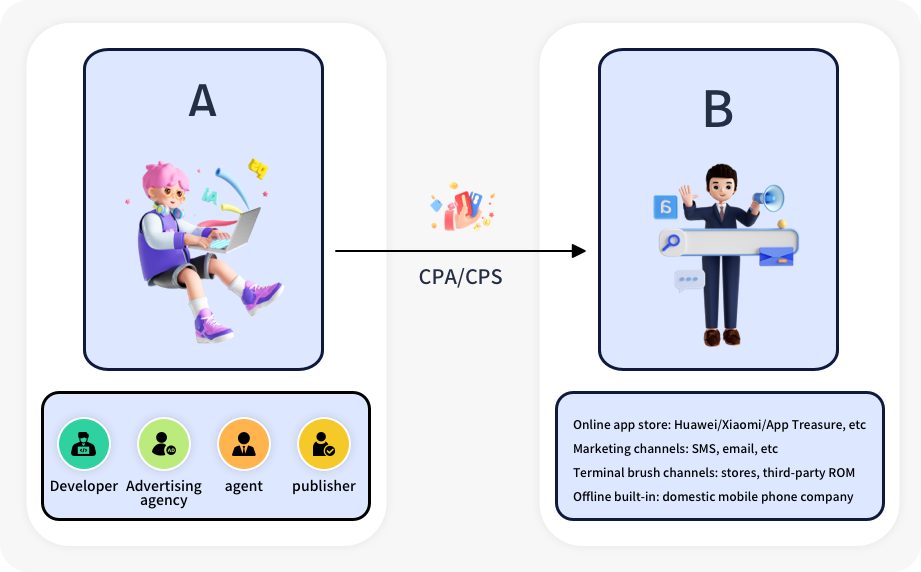
In mobile internet channel cooperation, different settlement models directly impact marketing effectiveness and resource allocation efficiency. The current mainstream marketing settlement methods in the market, such as CPA/CPS, exhibit the following characteristics:
- CPA (Cost Per Action): Charges per specific user action, where “actions” can include registrations, interactions, downloads, orders, or purchases.
- CPS (Cost Per Sale): Charges based on sales revenue, where commissions are paid for each successfully completed transaction/order.
To implement CP settlement models effectively, the following challenges must be addressed:
1. Settlement and Evaluation Complexities: Manual errors in promoter accounting, CP deduction complexities, and identification factors (e.g., fill codes) hinder promoter motivation and make it difficult to assess actual channel contributions.
2. Inflexible Packaging Methods: Rigid channel packaging for hundreds of partners limits promotional strategy execution and efficiency improvements.
3. Delayed Data Feedback: Lack of real-time data prevents timely optimization during campaigns.
4. Fraud and Fake Traffic: Risks of fund misappropriation, false reporting, or human errors enable cheating in collaborations.
Under CPA/CPS models, inaccurate channel data statistics often trigger disputes among stakeholders, ultimately delaying campaign progress.
How to Solve CPA/CPS Statistical Challenges?
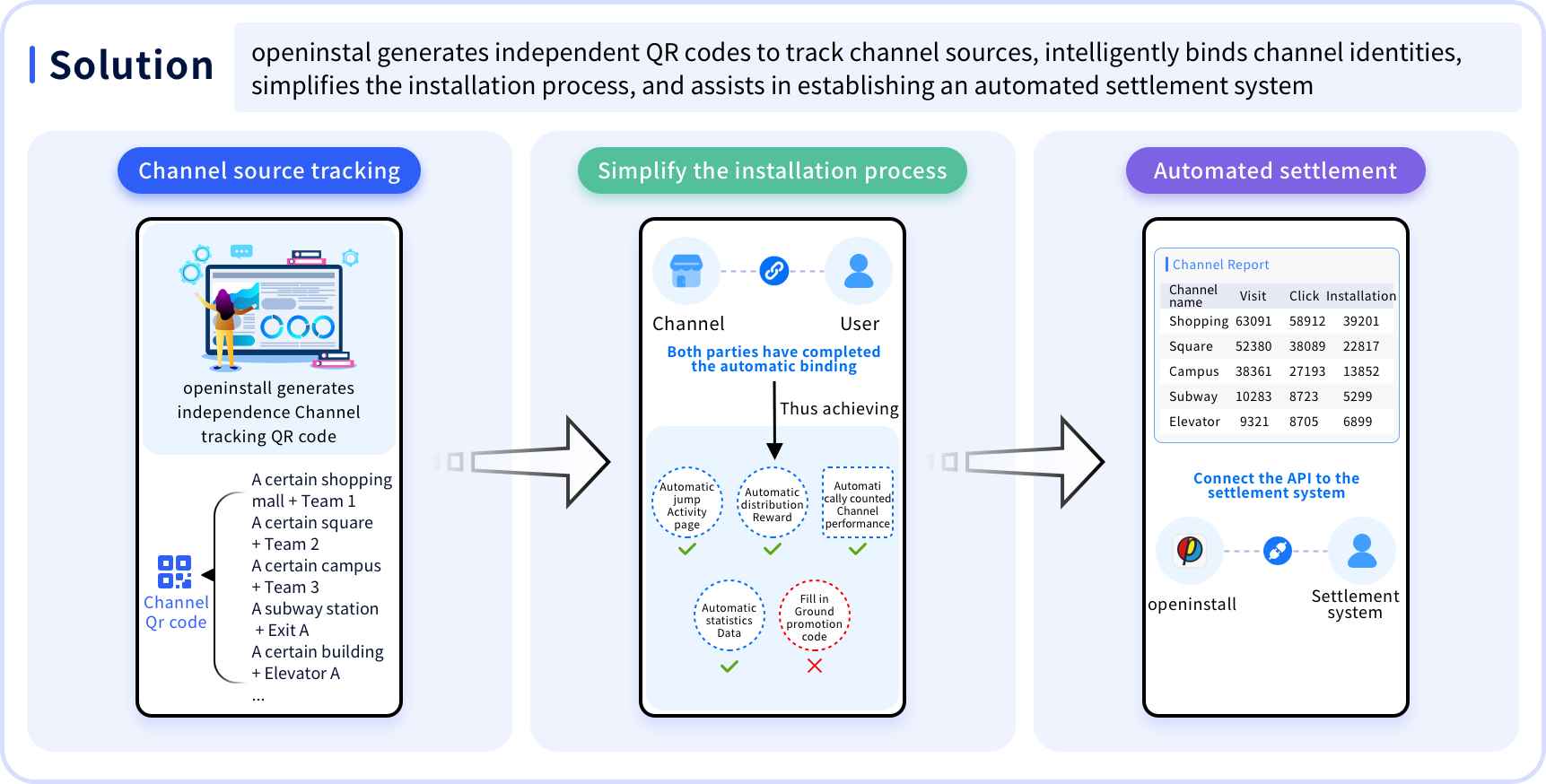
openinstall addresses these issues through app parameterized installation tracking, enabling full-chain data monitoring with these core features:
1. Multi-Channel Link Tracking
– Replace installation packages with **dynamic parameterized links/QR codes**. For example, adding custom parameters like `channel=ditui001` to partner links automatically tracks lifecycle behaviors (clicks, activations, payments) across thousands of channels.
2. Real-Time Data & Attribution
– SDK integration synchronizes real-time data, allowing advertisers to view channel-specific ROI instantly.
– API interfaces sync validated promotion data to financial systems, enabling dynamic budget allocation based on user lifetime value.
3. Tiered Channel Binding
– Create “super channels” to bind parent-child channel hierarchies, supporting short-tier distribution chain statistics.
– Upstream agents distribute tracking links, while downstream partners focus on promotions, with CPA/CPS settlements streamlined.
4. Cross-Platform Compatibility
– No repackaging: Drastically reduces preparation costs and iteration cycles for CPA/CPS campaigns.
– No invite codes: Boosts user conversion rates and incentivizes channel partners.
How to Set CPA/CPS Settlement Rules?
To maximize channel efficiency, combine “tiered pricing rules” with openinstall’s solutions for a transparent settlement system:
1. Define Settlement Cycles
– Typically monthly, but real-time data from openinstall reduces accounting costs and shortens payout cycles.
2. Negotiate Commission Rates
– CPS: Settle commissions as a percentage of actual sales.
– CPA: Set min/max commissions. For example, CPA model offers 10 yuan per new customer order, adjusted by quality and scale coefficients to form tiered pricing.
– SDK Integration: Support for Android/iOS/HarmonyOS.
– Channel Configuration: Set strategies via backend: Channel Grouping > Super Channels > Distribution > Data Analysis.
– System Syncing: Use APIs to connect verification data with ERP, CRM, and settlement systems.
Conclusion
Amid diminishing traffic and intensifying channel competition, resolving CPA/CPS statistical challenges hinges on building real-time, precise data tracking systems.
openinstall’s solution redefines value distribution in channel promotions through two core capabilities:
1. Dynamic Parameterized Links: Eliminate traditional packaging and invite code complexities.
2. Real-Time Attribution: Enable agile, data-driven strategies with instant ROI insights.
This framework not only reduces settlement friction but also transforms zero-sum CP settlements into collaborative, data-transparent partnerships. By accurately attributing every click, activation, and payment to its source channel, advertisers and promoters can align incentives and drive shared growth.

Recent Posts
- How to achieve app user growth without requiring invitation codes?
- App installation with custom parameter passing enables full-channel data attribution.
- App custom parameter-based installation enables full-channel data attribution.
- No Invitation Code Required | Streamlined App Installation Process and Implementation Principles
- Developer Guide: The Complete Process of Building an Ad Serving System and Integrating Front-End and Back-End Data
- OpenInstall Omnichannel Multi-scenario Solution
- Having trouble acquiring users and achieving conversions for your app? Here are solutions based on real-world examples.
- openinstall: A solution for attribution and redirection from web to app (W2A).
- How to efficiently use app data statistics
- In today’s wave of social networks, how should developers make good use of omni-channel statistics?