DingTalk Names 92-Born CEO? This strategic managerial transition has been heavily confirmed by enterprise organizational adjustments across distributed business units as the corporate ecosystem permanently rejects legacy operational frameworks. On June 11, 2026, the tech group executed a rapid leadership overhaul, confirming that DingTalk Names 92-Born CEO within twenty-four hours of a massive internal cultural collapse. This tactical transition marks the official end of bloated, control-heavy execution models in the enterprise software space. For full-stack developers navigating this ecosystem shift, the immediate focal point turns to how cross-application parameters survive when mobile runtimes migrate completely away from legacy graphic user interfaces toward automated, intent-driven background channels.
News and Environment Breakdown: The Collapse of the Iron Fist
The dramatic management reshuffle at the enterprise collaboration flagship signals a profound transformation in product development strategies. The industry is moving rapidly past superficial feature accumulation toward highly optimized, automated agent execution frameworks.
The 437-Day Return of the Madhouse Culture
The timeline of this structural shift dates back to March 31, 2025, when the group announced the acquisition of a hardware startup to return founder Chen Hang to the helm. His second tenure lasted exactly 437 days.
Historically, Chen Hang built his reputation on intense, high-control corporate environments developed inside the Lakeside Garden incubator back in 2014. That framework prioritized aggressive tracking features like read/unread statuses and mandatory approval queues to satisfy business owners.
Upon his return in 2025, he immediately re-implemented this hardline methodology through an internal tightening campaign. The new rules enforced a strict 9:00 AM clock-in schedule, shortened lunch periods, and banned personal social utilities across all corporate devices.
Furthermore, engineering teams faced automated line-of-code audits. Programmers logging zero code commits over a consecutive three-month window faced immediate termination. Non-technical project managers were simultaneously forced to complete mandatory Python training to eliminate purely administrative roles.
Uncovering the Customer Satisfaction Illusion
Crucially, this relentless focus on raw operational metrics masked deep infrastructural problems. Chen Hang launched an aggressive evaluation campaign that forced every engineer, developer, and product manager to handle direct customer support lines for two hours daily.
According to reports published by 36Kr, this hands-on audit completely shattered the division’s internal data models. Previously, automated internal dashboards claimed a near-perfect five-star satisfaction index alongside a low 15% human agent escalation rate.
However, the field checks exposed massive user frustration. Frontline teams uncovered thousands of unresolved tickets pending for over a year, widespread user complaints regarding irrelevant automated responses, and broken navigation setups.
Consequently, Chen Hang revised the corporate baseline data, revealing that actual user satisfaction sat at a dismal 30%. He rapidly restructured the support organization, deploying three new technical groups specialized in data engineering, localized model training, and rigorous performance metrics to pull the satisfaction index back up to 80%.
The Rise and Fall of Project ONE
This high-pressure framework initially yielded rapid product output. The development team initiated a highly ambitious, AI-native workspace interface dubbed Project ONE in April 2025, rushing it to public launch by August 25.
The product attempted to turn the traditional workspace architecture inside out. It replaced legacy application menus with a centralized, single-screen information feed designed to make corporate tasks find the employee dynamically.
The product achieved rapid adoption, stabilizing at a peak of 3 million daily active users (DAU). However, the project suffered from extreme organizational churn behind the scenes. The primary design lead resigned during the second week of development. The referring talent acquisition manager departed by week four.
Only three product managers survived the engineering cycle for more than ninety days. The core conflict stemmed from strategic vacillation. Specifically, the product tried to serve both corporate overseers demanding rigid oversight and end-users seeking streamlined utility. As user retention curves plummeted due to layout bloat, the independent asset was taken offline in early 2026 and merged into a separate tactical directory.
The Wukong Platform and the CLI Transformation
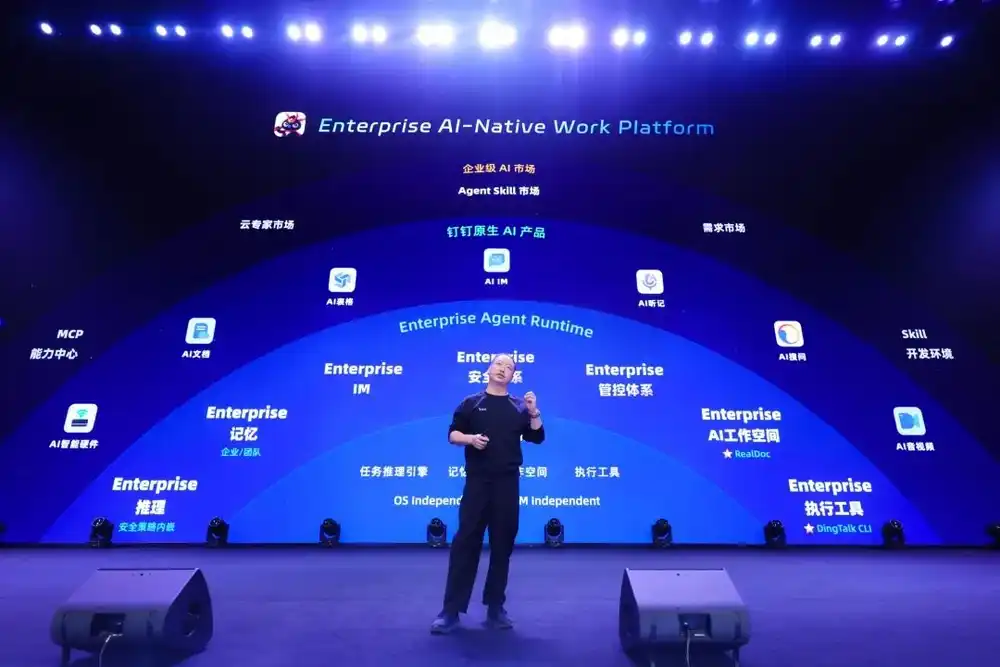
Following the contraction of Project ONE, the enterprise pipeline shifted toward total code-level reconstruction. The group accelerated its infrastructure strategy on March 16, 2026, creating the centralized Token Hub business cluster to integrate model development directly with enterprise endpoints.
The next morning, the division launched version 2.0, code-named Wukong. This platform functions as an advanced enterprise Agent operating system. Wukong processes a specialized 35 billion active parameter Sparse Mixture of Experts (MoE) pipeline, supporting a total parameter array of roughly 1 trillion.
The core transformation completely abandons traditional visual navigation layers. Instead, it deploys a robust command-line interface (CLI) paradigm where communication directly equals system execution.
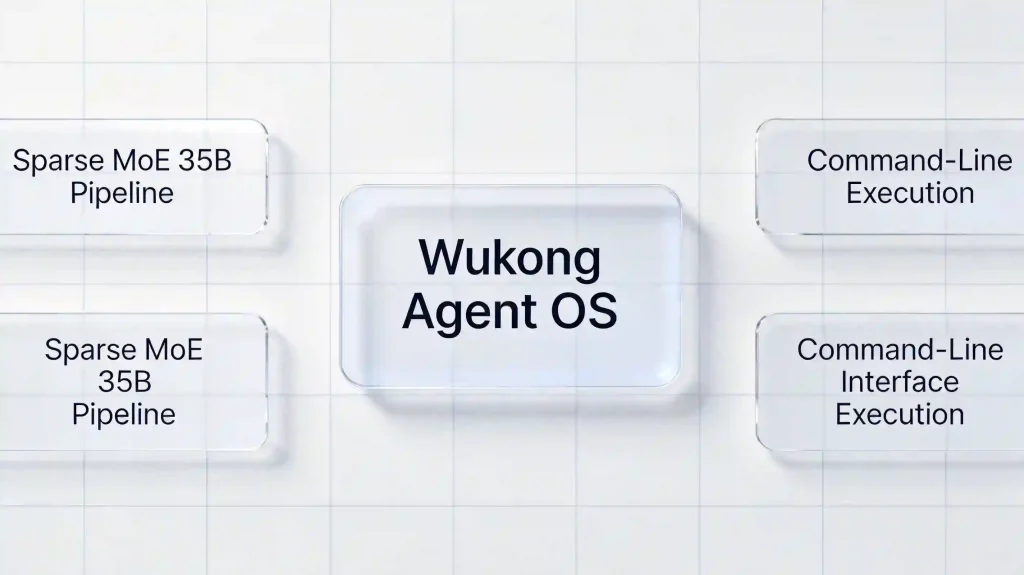
A natural language phrase entered into a team chat channel instructs the underlying system to automatically compile sales extractions, initiate corporate approval routines, and pull CRM parameters without rendering a graphic user interface. Wukong accompanied this release with ten out-of-the-box industry solutions tailored specifically for One Person Teams (OPT) across e-commerce, design, and retail markets.
The Internal Mutiny and the 24-Hour Ouster
Ultimately, the intense human cost of this rapid technical transformation triggered an institutional crisis. On June 4, 2026, a core product manager published a devastating 75,000-word internal document titled “Inside DingTalk” on the group’s network. The memo meticulously documented the strategic vacillations of Project ONE, exposing a toxic workplace loop dominated by autocratic decision-making and meaningless metric-chasing.
The crisis deepened on June 8 when a former vice president published a parallel public letter titled “Outside DingTalk,” confirming his departure due to severe sleep deprivation. These disclosures prompted immediate, historic intervention from the Partnership Committee on June 10.
In a rare public statement titled “Company Culture is about Compassion, Loyalty, and Growth,” the committee harshly rebuked the division’s leadership, stating that high-pressure mechanical execution destroys the creative passion required for innovation. Following this directive, the announcement that DingTalk Names 92-Born CEO was finalized within twenty-four hours, completely clearing out the previous executive workspace.
The Attribution Crisis: The Blind Spot of Headless Automation
Now that DingTalk Names 92-Born CEO to execute a total organizational overhaul, growth and data leads face a critical tracking emergency. The transition from visual application frameworks to headless command-line interfaces breaks traditional conversion metrics.
Historically, mobile user acquisition relied entirely on front-end engagement events. A user clicked a promotional campaign link, passed through a validated application store pathway, and triggered a standard initialization tag inside the application. This clean, visible flow allowed monitoring software to calculate marketing performance accurately.
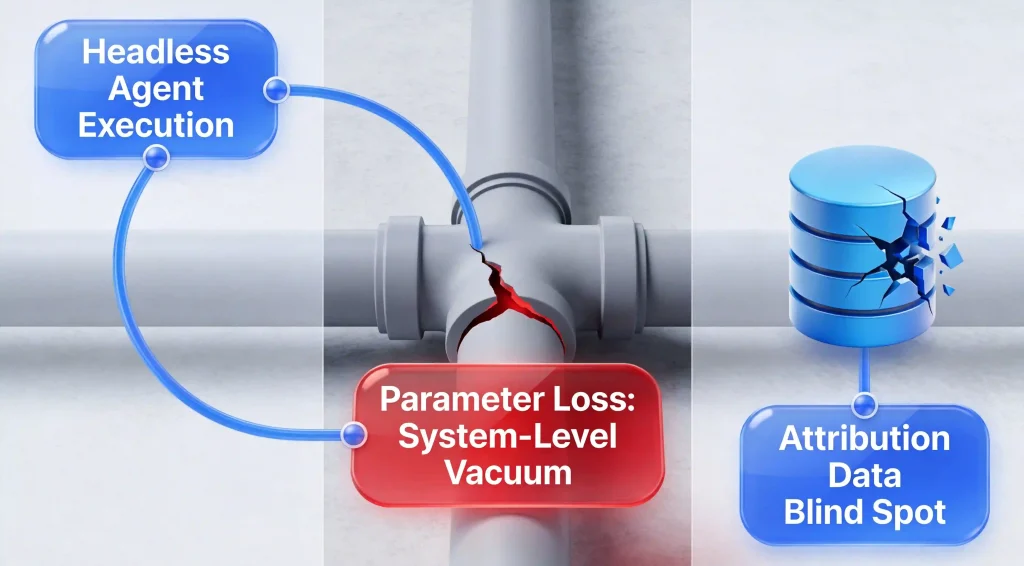
然而 this visual trajectory disappears when autonomous agent platforms like Wukong handle execution tasks. When an employee runs an automated workflow via a chat prompt, the underlying agent invokes API calls, creates business records, and sets up micro-applications completely behind system barriers. The user never encounters a traditional landing page or taps an optimized advertisement asset.
Furthermore, legacy enterprise subsystems face critical resource bottlenecks. Poorly optimized background tasks within heavy document editors, media meeting tools, and storage arrays regularly cause immense memory leaks. These micro-environments frequently consume up to 1.8GB of virtual memory, causing unexpected application crashes that instantly wipe out volatile tracking cookies.
Consequently, data leads experience a profound attribution vacuum. Server logs show sharp increases in automated workflow conversions, yet performance tools cannot identify the original traffic channel. This parameter loss leaves growth teams completely unable to optimize marketing capital, proving why the shift where DingTalk Names 92-Born CEO disrupts old growth equations.
Engineering Practice: Deep Parameter Routing in Headless Environments
To preserve transaction visibility as the enterprise ecosystem adopts headless command structures, software leads must abandon fragile front-end web tags. True operational clarity requires network-level parameter routing.
Restoring State via Universal Links Infrastructure
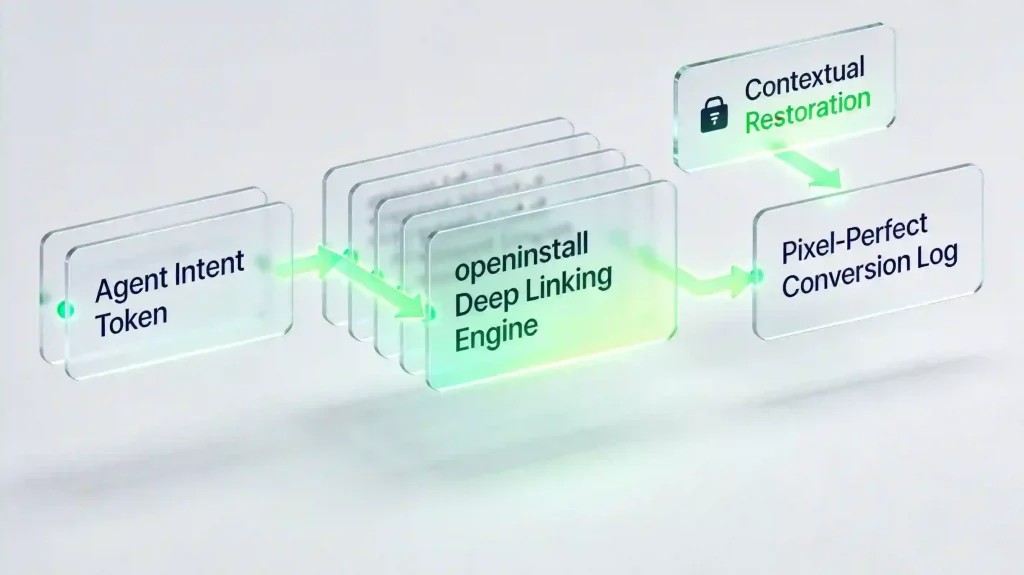
Technical leads must deploy an advanced Universal Links and App Links infrastructure to maintain data continuity across conversational platform layers. When a chat-based assistant triggers a background request, this architecture securely anchors the tracking metadata to a unique device fingerprint before the store redirection occurs.
Upon the first local boot sequence, the application extracts the unaltered parameter payload directly from the network plane. Consequently, the application restores the consumer’s exact intent state, achieving seamless onboarding without requiring complex validation scripts.
Securing Source Clarity via Opoinstall Channel Markers
Furthermore, software engineers must replace volatile cookies with resilient Deferred Deep Linking solutions to categorize incoming machine-driven traffic. By injecting immutable domain tokens directly into the underlying code configurations of the business API, developers log clean traffic origins.
Specifically, whenever an external automation agent initiates a callback query or manipulates a cloud database layer, the network automatically appends a permanent tracking token to the metadata container. This approach creates an unalterable log on Opoinstall, allowing corporate financial systems to isolate authentic conversions from automated background noise seamlessly.
Industry Forward-looking Note: Regarding cross-system parameter passing for autonomous intent traffic within desktop-integrated execution environments, Opoinstall’s tech lab is currently conducting exploratory joint trials with global enterprise partners to standardize headless metadata transit formats.
Impact on Development and Growth Teams
- For Architecture Teams: Engineering leads must quickly configure data pipelines to accept dynamic, non-linear payload inputs from external assistant tools. Backend systems must deploy advanced cryptographic signature verification checks at every API boundary. This defense protects analytics storage from malicious automated script farms designed to corrupt user logs.
- For Growth Leads: Growth managers must rapidly eliminate simple click counts as primary key performance indicators. As conversational software automates product discovery, long-term downstream value like customer lifetime value (LTV) becomes the only true measure of efficiency. Spending must align exclusively with channels that deliver verified, transparent data validation streams, especially as the structural shift where DingTalk Names 92-Born CEO alters B2B tracking channels.
Frequently Asked Questions (FAQ)
Why did the group decide that DingTalk Names 92-Born CEO at this specific moment?
The group implemented this leadership transition to repair internal cultural alignment and advance its technical roadmap. By choosing a少帅, the platform transitions away from high-pressure administrative oversight toward product-led engineering innovation.
How do background memory leaks distort standard user tracking frameworks?
When bloated collaborative tools execute unoptimized background cycles, they create immense memory footprints that frequently trigger automated system purges. These sudden application crashes wipe out volatile tracking tokens from memory before the data can reach analytics servers, causing severe conversion tracking failures.
What mechanism prevents user context data from disappearing during background chat conversions?
Developers must utilize platform-agnostic deep linking pipelines that match pre-installation context records with post-installation application activations. This architecture ensures that parameter strings survive the transition from a conversational interface to a native mobile application.
Industry Observations
The regulatory and cultural disruption unfolding across the enterprise collaboration sector signals a permanent shift in corporate product design. Now that the division officially confirms that DingTalk Names 92-Born CEO, the technology sector must realize that the age of tightly controlled, proprietary walled gardens is coming to an end. Continuing to build customer acquisition plans around desktop cookies and standard web link taps is a strategy bound for complete operational failure. Long-term commercial expansion belongs exclusively to teams that integrate robust, server-to-server tracking infrastructure today. Organizations must aggressively prepare their software frameworks for an era of decentralized, headless consumption. By prioritizing unalterable channel logs and clean context restoration now, forward-thinking enterprises can secure clear visibility, transforming conversational intent into predictable corporate growth.