
Tech Giants Launch ATH Protocol? This stringent regulatory milestone has been conclusively validated by leading institutions battling rampant bot activity. On April 29, 2026, authorities officially established the Agent Open Source Community in Beijing. Consequently, this unprecedented ecosystem shift builds a massive compliance wall. Developer teams must now ask a critical question. How do we restructure our core security bus to capture genuine human intent while blocking malicious interactions?
News & Context Breakdown
The Agent Trust Handshake (ATH) 1.0 release completely redefines AI interaction boundaries. Specifically, cross-platform multi-agent collaboration creates immense digital value. However, it also exposes severe security vulnerabilities. This new protocol specifically targets missing identity authentication and insufficient authorization control. Furthermore, it addresses untraceable interactions and compromised data sovereignty.
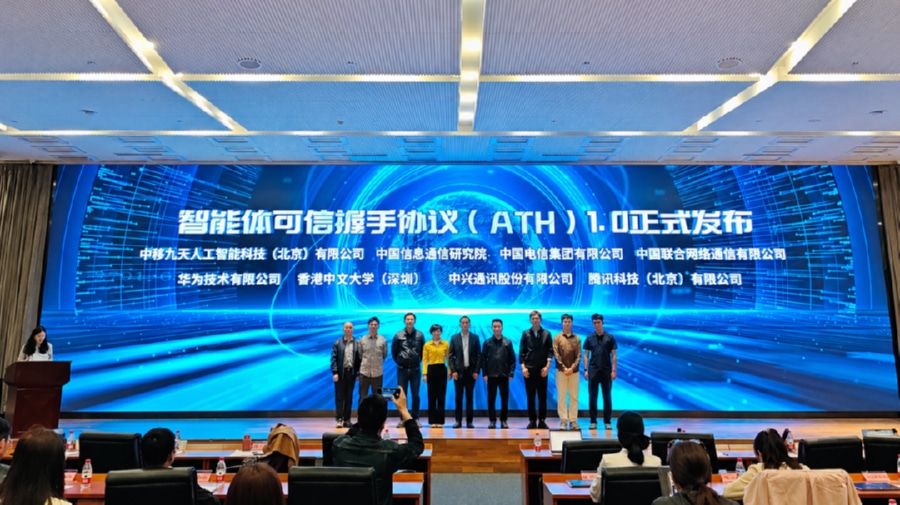
The April 29 Agent Open Source Community Salon
The China Academy of Information and Communications Technology (CAICT) hosted the landmark event. Deputy Chief Engineer Xu Zhiyuan delivered the opening remarks. Furthermore, Li Wei analyzed the design philosophy of the new protocol. Representatives from China Telecom, China Unicom, and China Mobile attended. Crucially, experts from Tencent’s Xuanwu Lab and Huawei jointly released the ATH 1.0 standard.
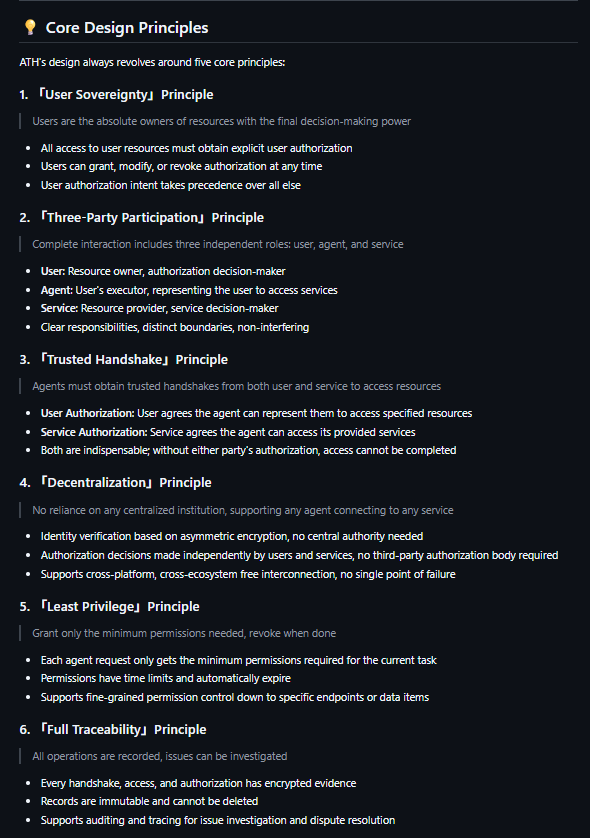
Six Core Design Principles for AI Trust
The protocol relies on six core design principles. First, User Sovereignty guarantees that users maintain absolute control over resources. Second, Three-Party Participation involves the user, the agent, and the service independently. Third, the Trusted Handshake mandates dual authorization from both users and services. Meanwhile, Decentralization eliminates the need for centralized authorities. Furthermore, the Least Privilege principle grants only minimum necessary permissions. Finally, Full Traceability ensures immutable encrypted records for every single interaction.
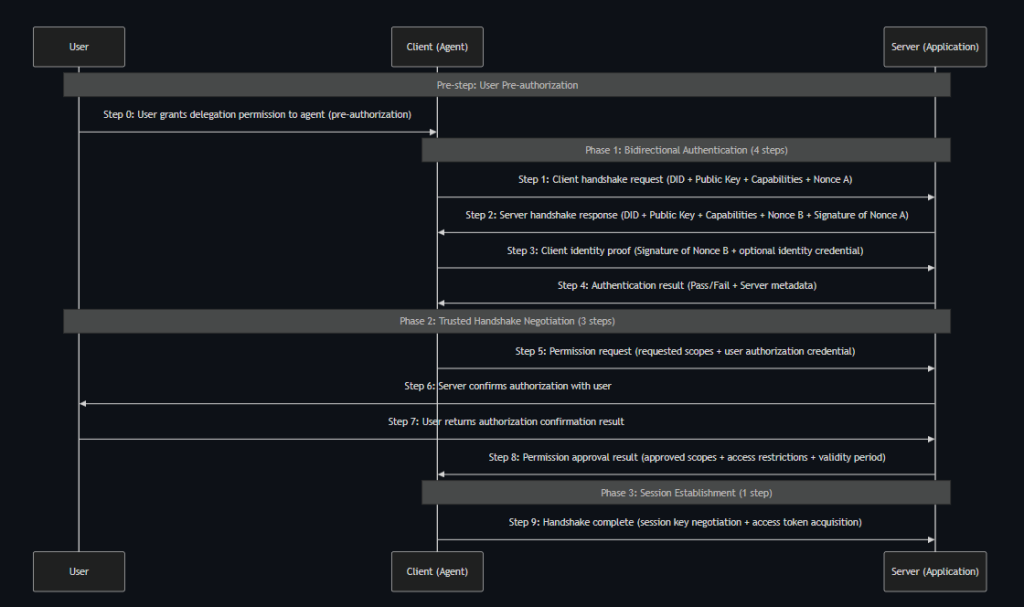
The Nine-Step Trusted Handshake Flow
This framework introduces a sophisticated nine-step workflow. Specifically, it divides into three distinct operational phases. Phase one handles bidirectional authentication across four steps. Here, the client and server exchange decentralized identifiers and public keys.
{
  "type": "AthIdentityAnnouncement",
  "client_did": "did:ath:agent:123456789",
  "supported_versions": ["0.1"],
  "nonce": "random_challenge_string_A"
}
Phase two manages scope negotiation across three steps. Consequently, the server directly confirms authorization with the resource owner. Phase three finalizes session establishment in one step. As a result, both parties negotiate session keys and open encrypted communication channels.
Breaking the Boundaries of MCP and A2A
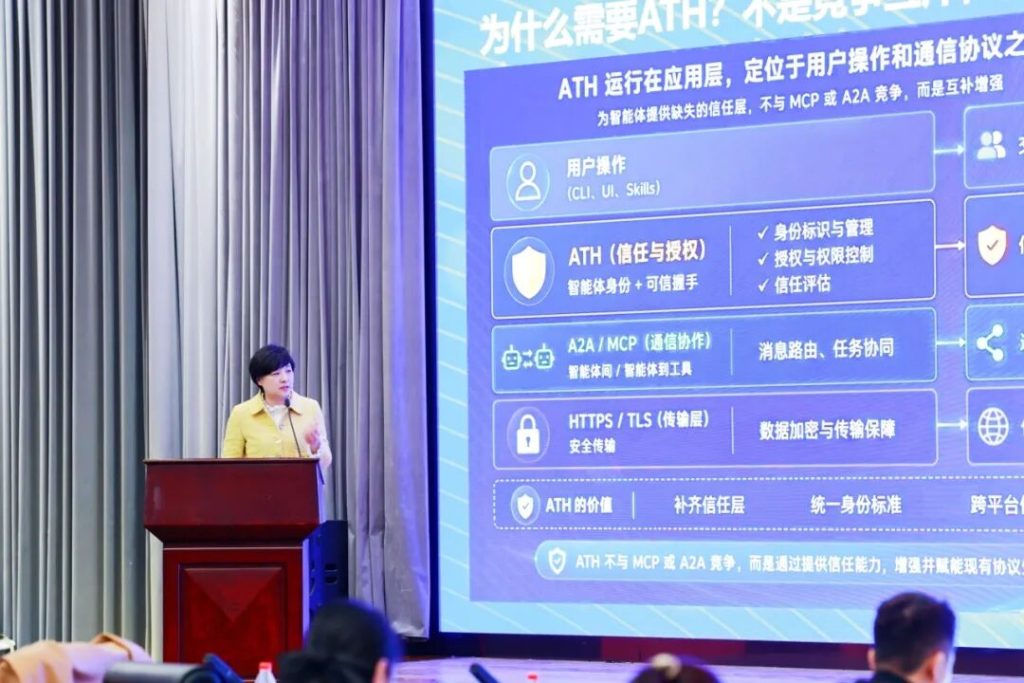
Traditional protocols like MCP and A2A feature coarse permission granularity. Conversely, this new standard acts as a strict security checkpoint before any communication begins. It perfectly balances interaction efficiency with rigorous data security. Furthermore, developers officially published the source code on GitHub Repository. The ecosystem includes specific components like typescript-sdk, python-sdk, athx core engine, and gateway services. As a result, any compliant system can connect seamlessly.
The Attribution Crisis
Mainstream users simply see a secure AI environment. However, developers face a terrifying compliance wall. The rise of autonomous agents shatters traditional tracking mechanisms. Active web traffic relies on human clicks. Conversely, intent-driven traffic executes tasks autonomously. This dynamic creates massive data discrepancy.
Malicious bots can easily spoof agent identities to execute click injection. Consequently, developers lose visibility into the true user journey. They cannot accurately trace conversions back to genuine human touchpoints. This massive blind spot ruins campaign optimization.
Engineering Practice: Rebuilding Anti-Fraud Infrastructure
To survive this ecosystem shift, apps must deploy resilient security architectures. They must connect isolated systems securely.
Problem: Malicious scripts impersonate legitimate agents. This causes severe parameter loss and misattributed conversions. Data discrepancy destroys marketing budgets. Practice: Engineering teams must implement advanced routing and verification protocols. By utilizing openinstall global’s Anti-Fraud and Ad Performance infrastructure, developers can embed persistent security parameters. The engine instantly captures the source context. It authenticates the digital signature before routing the user. This safely restores the exact session state intended by the original touchpoint. Benefit: This approach eliminates the routing gap. It ensures a frictionless user transition across diverse hardware ecosystems. Furthermore, it guarantees pixel-perfect conversion tracking, significantly lowering Customer Acquisition Cost (CAC).
Industry Forward-looking Note: Regarding cross-device parameter passing for autonomous intent-driven traffic, openinstall’s tech lab is currently conducting joint exploratory research with leading App partners.
Impact on Dev & Growth Teams
For Developers/Architecture: The multi-device reality requires robust API endpoint preparation. Developers must handle dynamic routing requests smoothly. They must optimize multi-device ID mapping strategies to maintain session continuity. Additionally, engineers must implement strict signature verification. This prevents click injection from malicious bots attempting to exploit cross-platform transition vulnerabilities.
For Product & Growth: Growth leads must aggressively redefine their primary acquisition channels. Relying on outdated click models is no longer viable. Budget strategies require real-time ROAS optimization focused on universal campaigns. Product managers must prioritize contextual restoration. They must ensure the mobile onboarding flow perfectly mirrors the specific context.
Frequently Asked Questions (FAQ)
What does the news Tech Giants Launch ATH Protocol mean for AI?
It establishes a standardized framework for AI agents. Specifically, it provides unified technical specifications for identity verification. Furthermore, it ensures that all AI interactions remain secure, transparent, and fully traceable.
How does the nine-step handshake protect user data?
The protocol mandates explicit consent from both the user and the service. Meanwhile, decentralized identifiers and public keys authenticate both parties. As a result, malicious systems cannot forge identities to steal sensitive private data.
Why is this compliance wall disrupting mobile app ecosystems?
Autonomous agents generate massive amounts of intent-driven traffic. Consequently, legacy attribution models fail to track these automated interactions accurately. Developers must upgrade their security infrastructure to filter out fraudulent bot activities.
Industry Observations
The event where Tech Giants Launch ATH Protocol marks a watershed moment. It brutally exposes the inherent security flaws of early generative AI deployments. As corporations abandon unregulated AI integrations, the dream of an open ecosystem is dissolving. We are now entering a highly regulated, secure reality governed by the CAICT Official Website.
For the digital ecosystem, this shift dictates new rules of engagement. The competitive moat is no longer tied to open access. Instead, it relies entirely on the secure infrastructure that connects these agents. Applications that fail to implement robust anti-fraud routing will inevitably be paralyzed by data discrepancy. Moving forward, the secure transition of users across a diverse array of platforms will define the ultimate winners in this era of relentless ecosystem restructuring.