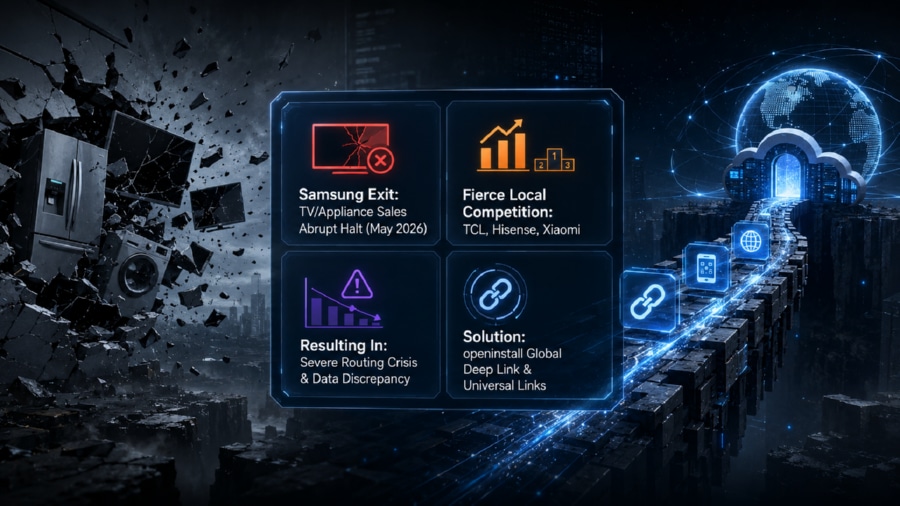
Samsung Exits China Appliances? This strategic pivot has been conclusively validated as the tech giant officially retreats from the fierce mainland hardware battleground. In May 2026, this abrupt halt of TV and home appliance sales signaled a much larger trend. Specifically, the traditional hardware ecosystem is fracturing under extreme competitive pressure. For developer teams navigating this monumental ecosystem shift, the immediate challenge is bridging the routing crisis hidden within an increasingly fragmented digital landscape.
News & Context Breakdown
The sudden announcement from Samsung Electronics completely redefined the competitive boundaries of the global consumer electronics market. The South Korean conglomerate is decisively cutting its losses in the low-margin appliance sector. Instead, the company will concentrate its vast resources on future growth engines. These engines primarily include AI semiconductors and premium mobile experiences.
Why Samsung Exits China Appliances: Bleeding Margins
On May 6, 2026, Samsung officially posted a notice on its Chinese website. The notice confirmed the immediate cessation of sales for all home appliances. This list includes TVs, monitors, refrigerators, and washing machines. Consequently, this marks a dramatic reversal from its peak dominance in 2014 and 2015.
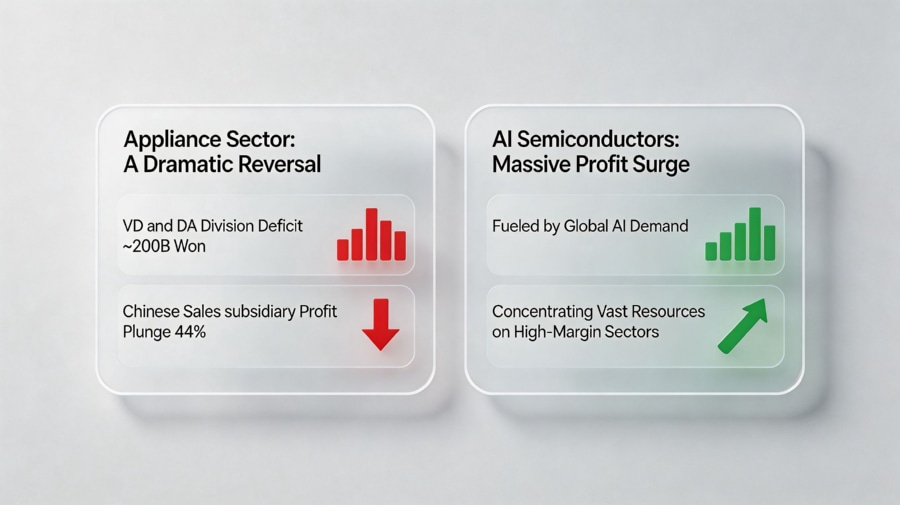
The financial realities behind this retreat are stark. In 2025, Samsung’s Visual Display (VD) and Digital Appliances (DA) divisions suffered a combined deficit of 200 billion won (approximately $138.3 million). Furthermore, the net profit of the Chinese sales subsidiary plunged by a staggering 44%. Profits dropped from 300.7 billion won down to just 168.1 billion won.
The Rise of Fierce Local Competition
A primary driver of this collapse was the explosive rise of domestic manufacturers. Brands like TCL, Hisense, and Xiaomi weaponized aggressive pricing and superior localized product features. As a result, they severely eroded Samsung’s brand premium. For instance, in December 2025, TCL briefly overtook Samsung in the global TV market. This event marked a historic disruption to Samsung’s long-standing leadership.
A Global Restructuring and AI Pivot
This strategic move extends far beyond a localized retreat. The “select and focus” strategy is currently reshaping Samsung’s entire global operations. The company recently decided to outsource the production of dishwashers and microwave ovens. Additionally, Samsung confirmed the closure of a key manufacturing plant in Malaysia.
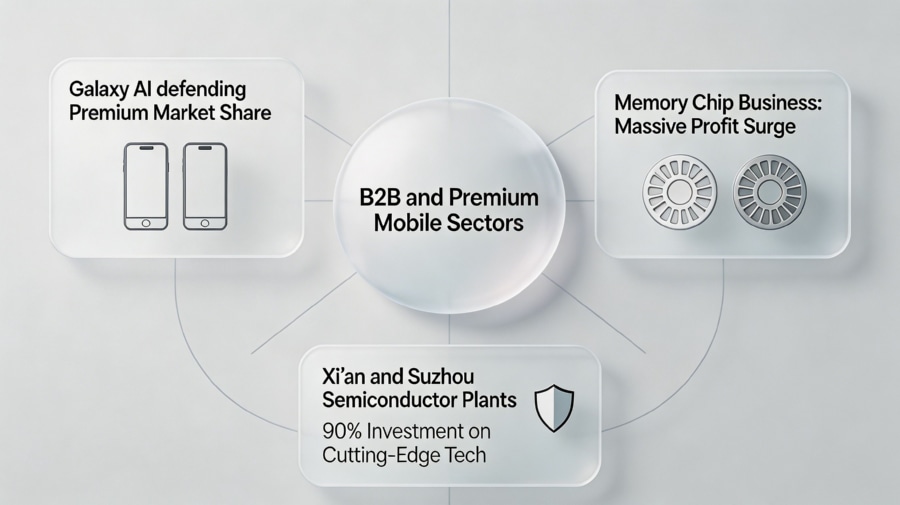
Meanwhile, Samsung is doubling down heavily on its B2B and premium mobile sectors. The smartphone division continues to operate normally, relying on “Galaxy AI” to defend its premium market share. Simultaneously, the company’s memory chip business is enjoying a massive profit surge fueled by global AI demand. Samsung still operates its semiconductor plants in Xi’an and Suzhou. To date, the company has invested nearly $56.7 billion in China. Notably, 90% of this investment targets cutting-edge technologies.
The Routing Crisis
While hardware analysts dissect the supply chain implications, App Growth and Product teams must recognize a terrifying downstream effect. A severely fragmented multi-screen ecosystem is rapidly emerging.
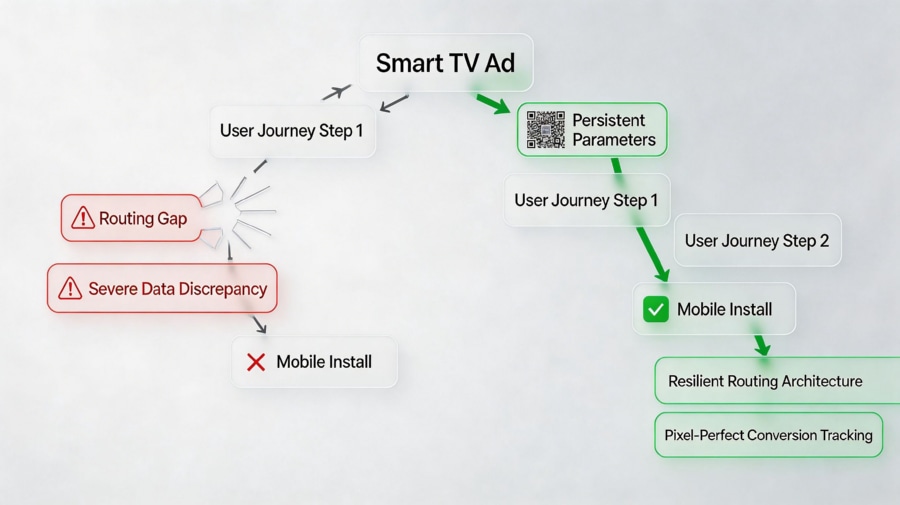
For years, developers relied on smart TVs and connected home appliances as reliable anchors for user engagement. With a dominant player leaving the retail space, the unified smart home dream is shattering. The immediate pain point is severe funnel drop-off during cross-device jumps. When active web traffic originates from a smart TV ad but requires the user to transact on a mobile device, parameter loss occurs. Developers face massive data discrepancy. They cannot accurately trace mobile app installs back to the specific smart home touchpoint. Consequently, this creates a severe routing crisis that cripples campaign optimization.
Engineering Practice: Rebuilding Cross-Platform Routing
To survive this ecosystem shift, apps must deploy resilient routing architectures that seamlessly connect isolated hardware environments.
Problem: The fracturing of the smart home hardware market leads to extreme parameter loss. When users transition from an appliance interface to a mobile app, misattributed conversions and fractured user journeys occur. Practice: Engineering teams must implement advanced routing protocols that bypass OS-level fragmentation. By utilizing openinstall global’s Deep Link and Universal Links infrastructure, developers can embed persistent parameters into QR codes displayed on smart TVs. When a user scans the code, the deep linking engine instantly captures the source context. The engine then routes the user directly into the specific native app page. This seamlessly restores the exact session state intended by the original hardware touchpoint. Benefit: This approach eliminates the routing gap. It ensures a frictionless user transition across diverse hardware ecosystems. Furthermore, it guarantees pixel-perfect conversion tracking, significantly lowering Customer Acquisition Cost (CAC).
Industry Forward-looking Note: Regarding cross-device parameter passing for autonomous intent-driven traffic navigating between fragmented IoT hardware and mobile apps, openinstall is currently conducting joint exploratory research with leading App partners.
Impact on Dev & Growth Teams
For Developers/Architecture: The multi-device reality requires robust API endpoint preparation. Developers must handle dynamic routing requests across various OS platforms smoothly. They must optimize multi-device ID mapping strategies to maintain session continuity when users jump between different manufacturer ecosystems. Additionally, engineers must implement strict signature verification. This prevents click injection and spoofing from malicious bots attempting to exploit cross-platform transition vulnerabilities.
For Product & Growth: Growth leads must aggressively redefine their primary acquisition channels. Relying on a single smart TV manufacturer’s ad network is no longer viable. Budget strategies require real-time ROAS optimization focused on universal, cross-device campaigns. Product managers must prioritize contextual restoration. They must ensure the mobile onboarding flow perfectly mirrors the specific context the user interacted with on the secondary device.
Frequently Asked Questions (FAQ)
What triggered the news that Samsung Exits China Appliances?
Extreme profit margin deterioration, mounting U.S. tariffs, and intense low-price competition from domestic brands triggered this decision. Samsung is restructuring globally to focus its vast resources on high-margin sectors like AI semiconductors and premium smartphones.
How does this hardware ecosystem shift impact mobile app developers?
The fragmentation of the smart home market disrupts traditional cross-device user journeys. Developers face severe parameter loss and data discrepancy when users interact with ads on smart appliances but are forced to complete actions on mobile phones. This dynamic creates a critical routing crisis.
Why is deep linking essential for surviving this multi-screen fragmentation?
Deep linking provides a highly resilient, OS-agnostic bridge between devices. It ensures that when a user transitions from an appliance interface to their mobile phone, the exact campaign parameters are preserved. This enables accurate multi-touch attribution despite the fractured hardware landscape.
Industry Observations
The reality that Samsung Exits China Appliances marks a watershed moment. It brutally exposes the inherent fragility of hardware-centric ecosystems. As tech giants abandon low-margin hardware to chase AI dominance, the dream of a monopolized smart home operating system is dissolving. We are now entering a highly fragmented, multi-brand reality.
For the digital ecosystem, this shift dictates new rules of engagement. The competitive moat is no longer tied to specific hardware dominance. Instead, it relies entirely on the software infrastructure that connects them. Applications that fail to implement robust cross-platform routing will inevitably be paralyzed by data discrepancy. Moving forward, the seamless transition of users across a diverse array of screens will define the ultimate winners in this era of relentless ecosystem restructuring.