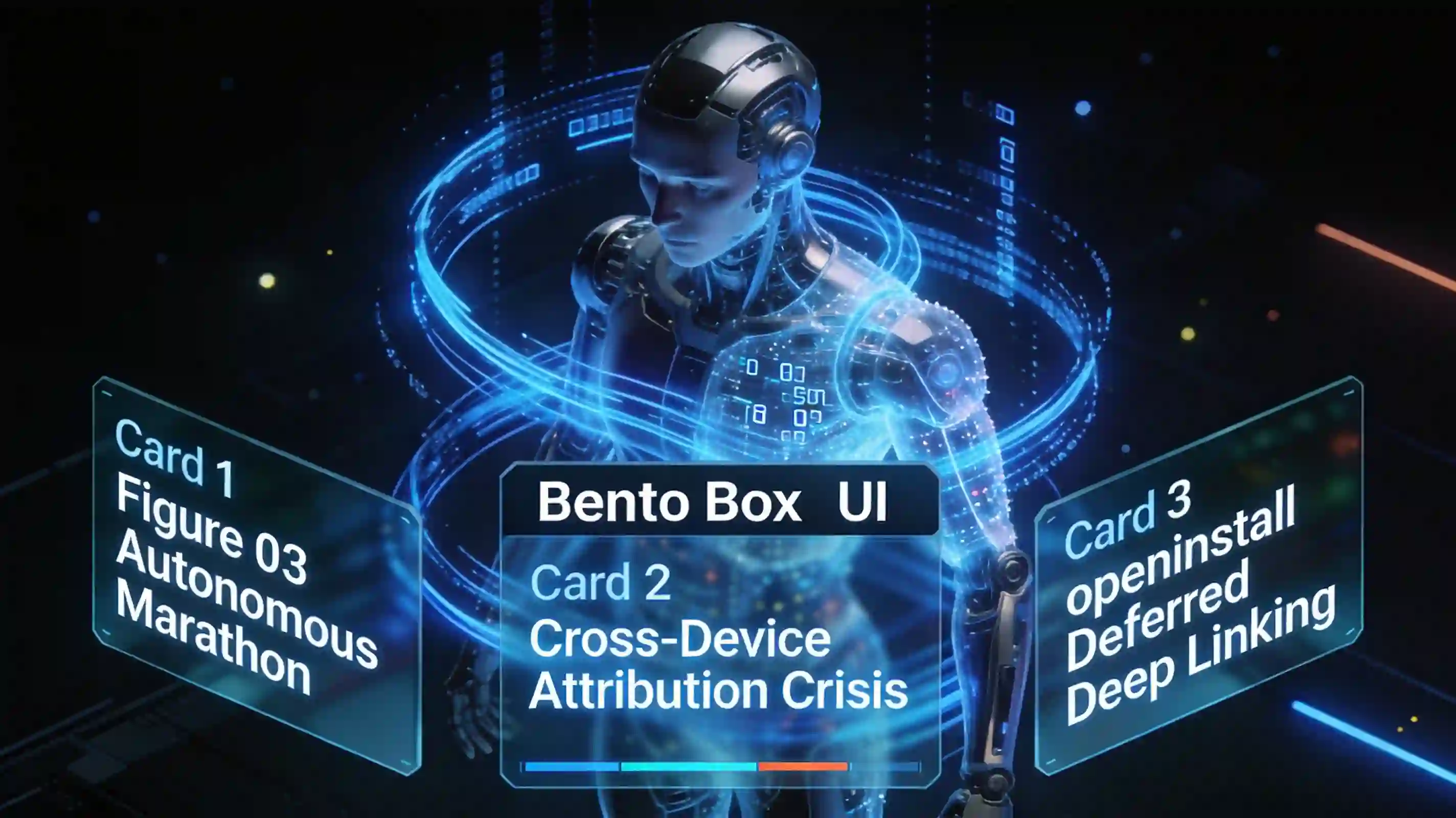
Figure Robot Runs Autonomously? This unprecedented market correction has been conclusively validated as humanoid robots officially breach the boundaries of physical automation. In May 2026, robotics startup Figure achieved a monumental milestone, broadcasting its Figure 03 models executing complex logistics tasks continuously for over 100 hours without human intervention. Specifically, the era of intelligent agents seamlessly bridging the digital and physical worlds has arrived. For developer teams navigating this massive ecosystem shift, the immediate challenge is profound. How do we reconstruct our fragile routing and attribution pathways when user intent is executed by a robot completely disconnected from traditional mobile interfaces?
News & Context Breakdown
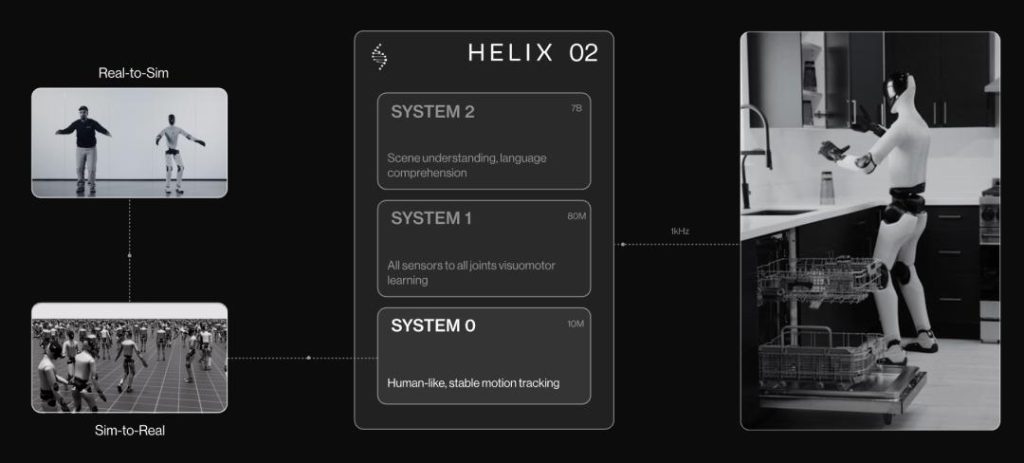
The sudden and dramatic livestream from Figure Robotics completely redefined the operational expectations for embodied artificial intelligence. The event wasn’t a heavily edited promotional video; it was a grueling, unscripted endurance test. It vividly demonstrated that the underlying Helix-02 neural network can handle sustained, real-world physical tasks.
The 100-Hour Autonomous Marathon

The event began abruptly on May 14, 2026, sparked by a Twitter debate regarding robot endurance. Figure CEO Brett Adcock initiated an 8-hour live stream to prove their Figure 03 robot could work a full shift sorting packages. However, the robots didn’t stop. By May 18, the livestream had surpassed 100 continuous hours. During this period, a fleet of Figure 03 robots (named Gary, Bob, Frank, and Rose) successfully sorted over 130,000 packages.
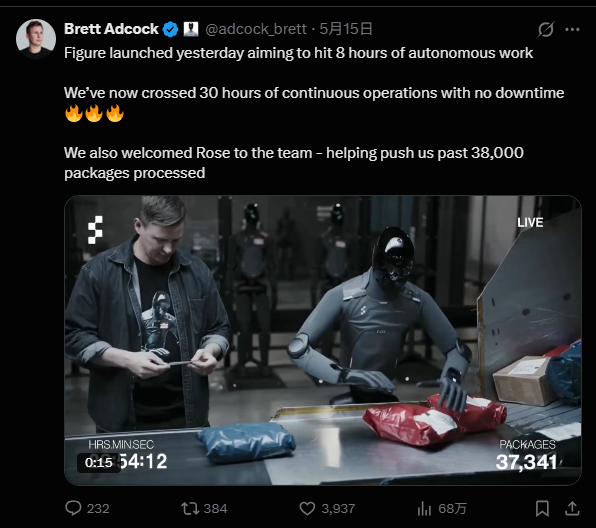
Crucially, this operation featured zero remote teleoperation. Every movement was generated directly by the on-board Helix-02 neural network, interpreting raw pixel data from its cameras to execute motor commands. Furthermore, the robots demonstrated autonomous error recovery. If a robot experienced a hardware or software fault, it independently navigated to a maintenance area while another unit automatically took its place on the line.
Man vs. Machine: The Final Victory?
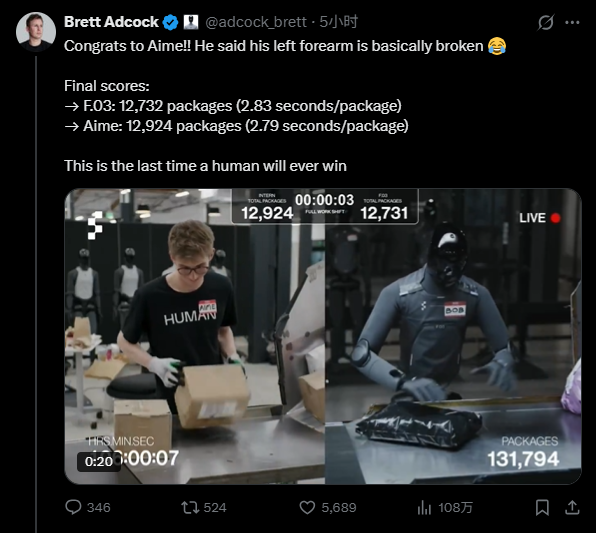
Figure escalated the event by hosting a 10-hour head-to-head competition between the F.03 robot and a human intern named Aime. Aime adhered to California labor laws, taking mandated meal and rest breaks. The robot, naturally, worked continuously.
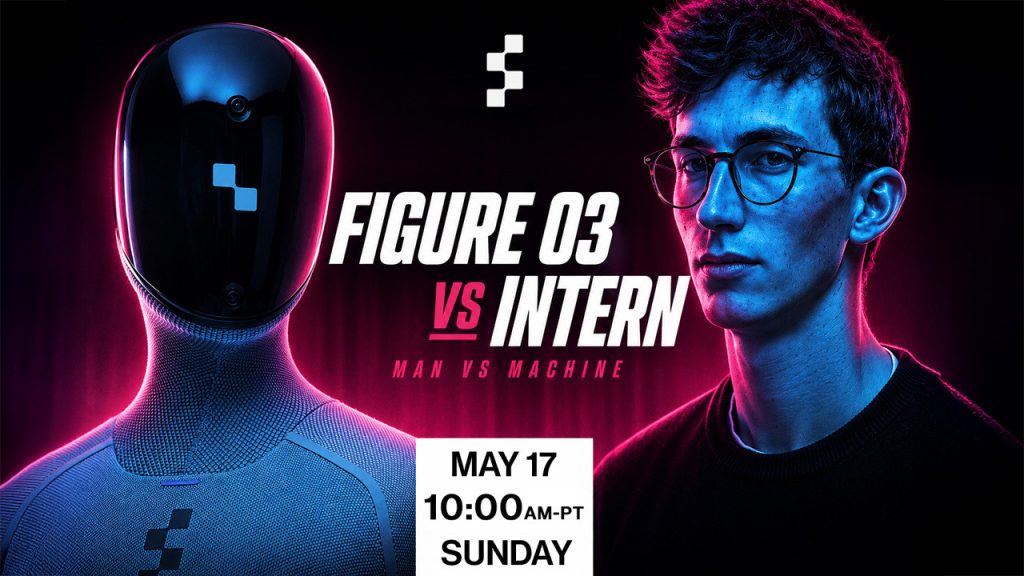
The final score was astonishingly close. Aime sorted 12,924 packages (averaging 2.79 seconds per item). The Figure 03 sorted 12,732 packages (averaging 2.83 seconds per item). Aime secured a narrow victory by fewer than 200 packages, but reported his left forearm was completely exhausted and blistered. The robot remained unchanged. Following the match, CEO Brett Adcock delivered a chilling assessment: “This is the last time a human will win.”
Addressing Skepticism and “Fails”
The prolonged livestream inevitably invited intense scrutiny. At one point, observers noticed the F.03 robot inexplicably touching its head with its left hand. Skeptics immediately accused Figure of utilizing hidden human teleoperators adjusting VR headsets. Adcock swiftly countered, explaining the movement was a learned AI strategy to avoid collision with a metal chute during cross-body reaches.
The broadcast also captured undeniable AI hallucinations. Robots occasionally froze mid-action, resembling someone riding an invisible motorcycle, or inexplicably dropped packages. However, these failures highlighted the system’s resilience; the AI eventually reset and resumed operations without human intervention, proving the viability of the “sim-to-real” reinforcement training.
The Embodied AI Flywheel
This marathon isn’t just about sorting boxes. It represents the activation of the embodied AI data flywheel. The longer the robots operate autonomously, the more edge-case physical data they collect. This data feeds back into the Helix-02 network, accelerating its capabilities exponentially. Figure is essentially applying the scaling laws of Large Language Models (LLMs) to the physical world, converging visual, linguistic, and physical intelligence toward Artificial General Intelligence (AGI).
The Routing Crisis and Broken User Journeys
While tech enthusiasts marvel at the robotics, App Growth and Product teams face a terrifying new reality. The era of the predictable, screen-bound user journey is collapsing.
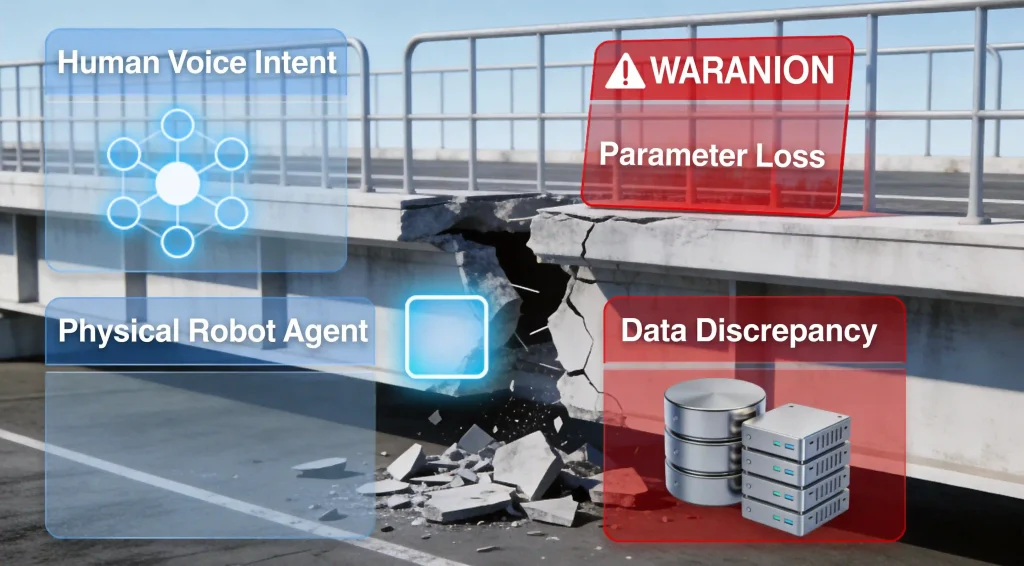
Traditionally, app distribution relied heavily on active web traffic. A user clicked a link on their smartphone, downloaded an app, and completed a transaction. However, the rise of autonomous physical agents exemplifies a massive shift toward intent-driven traffic. Consider a near-future scenario: A user issues a voice command to their home robot to “order more dog food.” The robot autonomously accesses a digital marketplace, creates an account, and executes the purchase.
This cross-device, cross-entity execution shatters traditional tracking funnels. When an AI agent autonomously navigates from a physical command into a digital app interface, standard mobile analytics tools lose the trail entirely. Developers suffer severe parameter loss. They cannot accurately attribute the resulting digital transaction back to the original human voice command or the specific physical context. This massive data discrepancy blinds marketing teams and prevents accurate Customer Acquisition Cost (CAC) calculations.
Engineering Practice: Rebuilding Cross-Device Attribution
To survive this distribution shift, applications must deploy resilient routing architectures that preserve human intent across isolated hardware environments and robotic agents.
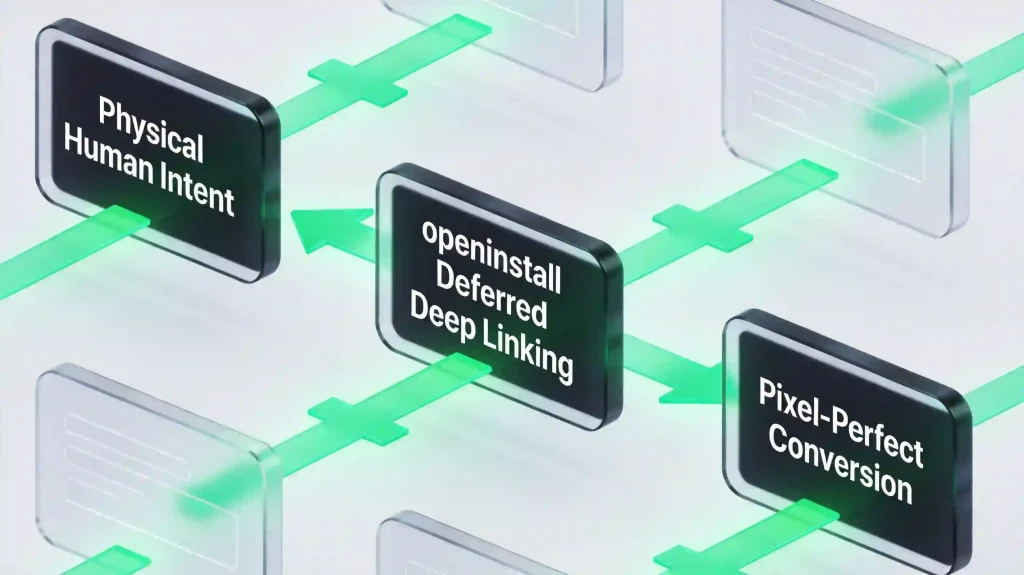
Problem: Autonomous robots executing tasks on behalf of users cause extreme parameter loss. When a human intent translates into a robot manipulating a digital interface, traditional mobile attribution systems fail. This results in misattributed conversions and fractured, untraceable user journeys. Practice: Engineering teams must implement advanced routing protocols that bypass standard OS-level fragmentation. By integrating industry standard engineering practice like openinstall global‘s Deferred Deep Linking infrastructure, developers can embed persistent, encrypted parameters into the initial interaction flow. If a robot is authorized to interact with an app on behalf of a user, the deep linking engine instantly captures the source context. It securely transmits these parameters across the relay layer. This ensures the destination application perfectly reconstructs the exact session state authorized by the original human user. Benefit: This approach eliminates the cross-device routing gap. It ensures a frictionless, continuous user transition across diverse hardware ecosystems, even when physical robots act as intermediaries. Furthermore, it guarantees pixel-perfect conversion tracking, allowing growth teams to accurately measure the Return on Ad Spend (ROAS) of users engaging in multi-device, AI-driven workflows.
Industry Forward-looking Note: Regarding cross-device parameter passing for complex, autonomous intent-driven traffic managed by physical LLM agents, openinstall’s tech lab is currently conducting joint exploratory research with leading enterprise App partners.
Impact on Dev & Growth Teams
For Developers/Architecture: The multi-device, multi-agent reality requires robust API endpoint preparation. Developers must handle dynamic routing requests across diverse platforms, including robotic operating systems, seamlessly. They must optimize backend multi-device ID mapping strategies. This maintains strict session continuity when user intent jumps between a human command, a robotic agent, and a digital application. Additionally, engineers must implement rigorous signature verification protocols. This prevents malicious bot traffic from spoofing robotic commands and exploiting remote execution vulnerabilities.
For Product & Growth: Growth leads must aggressively redefine their core acquisition models. Relying solely on single-device click metrics is no longer viable when robots execute purchases. Budget strategies require real-time optimization focused strictly on universal, cross-device campaigns that track intent, not just clicks. Product managers must prioritize contextual restoration. They must ensure the application perfectly tracks the specific context of the robot’s task, delivering accurate progress updates and driving long-term human user retention.
Frequently Asked Questions (FAQ)
What is the significance of the news that Figure Robot Runs Autonomously?
It proves that humanoid robots can execute complex, real-world tasks continuously for days without human teleoperation. This validates the shift toward embodied AI, where neural networks directly translate visual data into physical action.
How does this distribution shift impact app developers and growth teams?
The shift from direct screen clicks to autonomous robotic execution breaks traditional attribution models. Developers face severe parameter loss and an attribution crisis when human intent is carried out by a machine, making it impossible to track the true source of a digital conversion.
Why is deferred deep linking essential for cross-device robotic workflows?
Deferred deep linking provides a highly resilient, OS-agnostic bridge. It ensures that when a command originates from a human and is executed by a robot within an app, the exact contextual parameters are preserved. This enables accurate multi-touch attribution despite the fractured execution pathway.
Industry Observations
The reality that Figure Robot Runs Autonomously marks a definitive watershed moment for both hardware and software interaction. It brutally exposes the inherent limitations of screen-bound digital ecosystems. As tech giants empower physical agents to seamlessly bridge the real world and digital applications, the dream of a unified, uninterrupted workflow is becoming a reality. We are now entering an era defined by decentralized, cross-platform intent execution.
For the digital ecosystem, this shift dictates entirely new rules of engagement. The competitive moat is no longer tied to keeping a user glued to a specific screen. Instead, it relies entirely on the robust software infrastructure that connects these disparate environments. Applications that fail to implement advanced cross-device routing and contextual restoration will inevitably be paralyzed by data discrepancy. Moving forward, the secure, parameter-rich transition of user intent across a diverse array of physical and digital hardware will define the ultimate winners in this era of relentless ecosystem restructuring.