

Doubao Launches Paid Tiers? This strategic pivot signals a radical shift in industry dynamics. ByteDance’s AI division is ending its reliance on open-ended subsidies. As of late June 2026, the company will introduce multi-tiered subscription models. Specifically, this change forces the mobile ecosystem to face a hard reality. Meanwhile, free inference power is fading. Consequently, growth teams now face an unforgiving audit of their ROI. The era of unlimited resource consumption is officially over.
News and Environment Breakdown: The End of Subsidies
The industry is currently witnessing a brutal financial correction. For two years, the AI sector thrived on aggressive expansion. Companies utilized free access as a primary engine for user acquisition. However, as Doubao Launches Paid Tiers, the industry confirms that this subsidy-first mentality has hit a fiscal wall.
The Collapse of Indiscriminate Spending
Specifically, the internal dynamics at ByteDance have shifted toward sustainability. Reports indicate that Doubao reached 120 trillion daily tokens by early 2026. While this growth highlights model utility, it creates unsustainable pressure on data center utilization. Crucially, the company must now filter its user base. It aims to focus on high-value tasks—such as professional data analysis and content production—that justify expensive compute cycles.
A New Pricing Reality
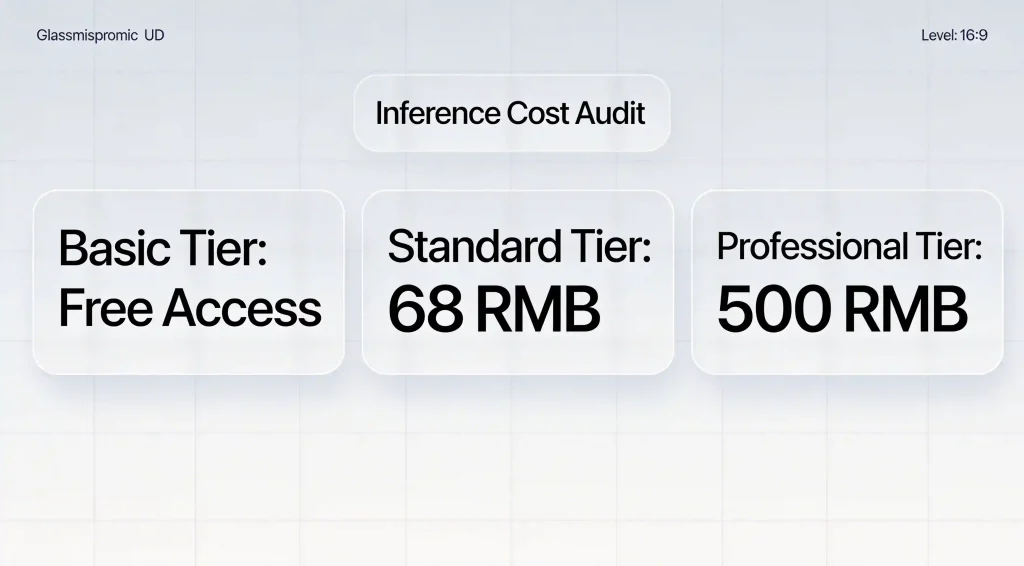
The proposed pricing tiers illustrate this clear segmentation. Subscription fees range from 68 RMB for standard access up to 5088 RMB annually for professional utility. Furthermore, this move aims to monetize efficiency rather than mere participation. Meanwhile, competitors have already begun adjusting their cost structures globally. They want to mitigate the “tokenmaxxing” phenomenon, where indiscriminate model usage by employees has severely eroded corporate margins.
Transitioning to Ecommerce Integration
Furthermore, the strategy extends beyond simple subscriptions. Reports suggest Doubao will integrate deeper with the Douyin e-commerce pipeline later this year. This move transforms the AI from a passive assistant into an active sales driver. Consequently, the company seeks to generate long-term commercial returns through subsidy-driven traffic conversion. In fact, this transition signals a major shift toward measurable, transactional value.
The Attribution Crisis: Traffic Flow and Data Gaps
As Doubao Launches Paid Tiers, the ripples extend far beyond simple pricing models. For digital marketers and growth professionals, this shift triggers a deeper crisis in how traffic is measured.
The Breakdown of Traditional Funnels
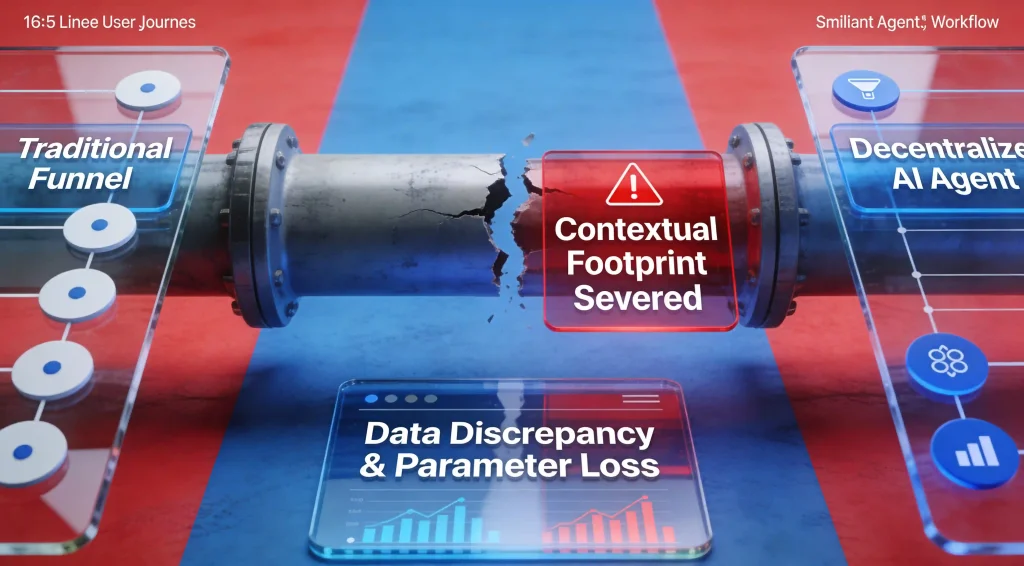
The traditional attribution funnel—reliant on clear-cut clicks and predictable user journeys—now faces an existential threat. When Doubao Launches Paid Tiers, it fundamentally alters user interaction with the model. Future interactions are no longer simple queries. Instead, they represent intent-driven tasks that jump across various terminals.
The Disappearing Contextual Footprint
When AI agents or intelligent assistants handle the discovery process, they operate within isolated system layers. Standard tracking mechanisms often lose sight of these journeys as they move through decentralized workflows. Furthermore, critical data points—such as which specific ad campaign or social referral triggered the intent—are often stripped away during processing. As a result, growth teams are left blinded. They struggle to distinguish between high-value organic traffic and misattributed background noise.
Engineering Practice: Building Resilient Attribution Foundations
To navigate the fragmentation caused by this ecosystem shift, engineering teams must adopt more robust, transparent methods for data reconciliation.
Implementing Transparent Attribution Logic
The first step toward reclaiming visibility involves the transition from opaque tracking to Deferred Deep Linking. By adopting this infrastructure, developers ensure that even when a user transitions from a web-based AI recommendation to an installed application, the original intent remains intact. Specifically, the session context, including campaign sources and specific prompts, is securely passed through the installation barrier. This provides a clear map of what triggered the conversion.

Harnessing Channel-Specific Identity
For teams managing diverse entry points, utilizing precise ChannelCode attribution is non-negotiable. This method allows for the creation of unique, cryptographically identifiable markers for every inbound link. By embedding these markers at the source, technical teams can accurately categorize traffic originators even when standard browser cookies fail. Consequently, this creates a source-of-truth log, allowing teams to calculate true marketing performance without relying on the unpredictable nature of AI-generated responses.
Industry Forward-looking Note: Regarding cross-device parameter passing for autonomous intent traffic, openinstall’s tech lab is currently conducting joint exploratory research with leading enterprise App partners to define standard metadata formats for AI-generated traffic flows.
Impact on Development and Growth Teams
- For Architecture Teams: Engineering leads must redesign their intake pipelines to be “attribution-aware.” APIs should be structured to accept incoming parameter payloads from external agents, ensuring source metadata is preserved throughout the process.
- For Growth Leads: As Doubao Launches Paid Tiers, growth strategies must move away from volume-based metrics. The focus should shift toward identifying high-LTV cohorts that demonstrate an ability to translate AI-driven discovery into revenue. Prioritizing traffic that maintains high-fidelity attribution data is the only way to safeguard marketing budgets.
Frequently Asked Questions (FAQ)
Why is Doubao shifting toward a paid subscription model now?
The shift is primarily driven by the escalating costs of inference and training. As Doubao Launches Paid Tiers, it attempts to align the cost of high-compute tasks with specific user revenue, effectively creating a sustainable business model that filters out low-value, high-compute traffic.
How does the rise of AI agents affect standard attribution funnels?
AI agents often operate within isolated system layers, which can strip away standard tracking metadata. This creates a “dark funnel” where the specific referral source is obscured, making it difficult for teams to prove the efficacy of their marketing spend.
What is the advantage of using deferred deep linking in this environment?
Deferred deep linking preserves session context across the download and installation process. Regardless of the agent or interface that initiated the download, the application can extract the pre-installation context upon the first launch, ensuring the user experience remains personalized and the attribution data remains precise.
Industry Observations
The move toward monetization is a critical stress test for the AI industry. As Doubao Launches Paid Tiers, the broader digital economy is forced to evaluate whether current AI adoption models provide long-term utility. Growth teams that prioritize structural clarity—utilizing sophisticated attribution pipelines—will be the ones to thrive. In this reshaped landscape, success belongs to those who view attribution not as a technical hurdle, but as the essential architecture of trust between platforms and their users.