
OpenAI 9-Month AI-Designed ‘Jalapeño’? Recent industrial-scale deployments conclusively validate this strategic pivot. Specifically, at the official product rollout on June 25, 2026, OpenAI officially unveiled its new specialized inference chip. Consequently, this launch triggers a massive wave of automated workflows. For developer teams, the immediate challenge is managing massive system executions while ensuring robust integration. Crucially, the milestone of OpenAI 9-Month AI-Designed ‘Jalapeño’ marks a major turning point in technical commercialization.
Deciphering the Custom Inference Architecture: OpenAI ‘Jalapeño’ and the 9-Month Silicon Tape-Out
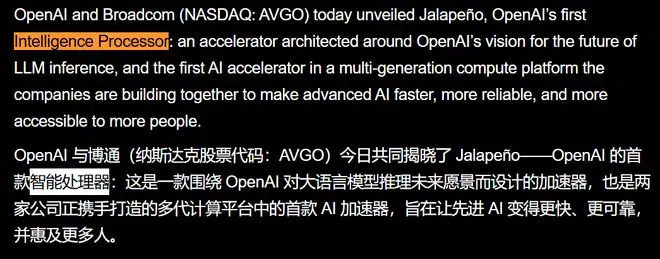
During the official release on June 24, 2026, OpenAI launched its new specialized hardware in collaboration with Broadcom. Specifically, when OpenAI ‘Jalapeño’ was delivered to CEO Sam Altman and President Greg Brockman, it marked a historic shift. Furthermore, this product directly addresses the bottleneck of expensive data movement between computing and memory layers. Consequently, the development of OpenAI ‘Jalapeño’ was completed from scratch in just nine months. Meanwhile, early laboratory testing of OpenAI ‘Jalapeño’ shows performance per watt substantially outperforming legacy systems. For instance, the chip is designed exclusively for high-throughput, low-latency large language model inference. Detailed engineering specifications can be verified through OpenAI Blog.
Hardware Acceleration and the Nine-Month Development Cycle
Specifically, the design of the ASIC was completed from initial draft to manufacturing tape-out in just nine months. Furthermore, this development cycle represents what is believed to be the fastest ASIC delivery in advanced semiconductor history. Consequently, this rapid iteration sets a new benchmark for silicon manufacturing. For instance, OpenAI used its own frontier models to accelerate parts of the design and optimization process. As a result, this meta-recursive process proves that artificial intelligence can design its own next-generation hardware.
Proactive Memory Architectures and Broadcom’s Implementation
To ensure scale, Broadcom handled the physical silicon implementation and networking protocols. Specifically, the processor integrates high-bandwidth memory (HBM) instead of cheaper types of DRAM. Furthermore, this memory setup prevents data movement bottlenecks during massive reasoning tasks. Consequently, the processor delivers substantially better performance per watt than current state-of-the-art accelerators. Meanwhile, the manufacturing ecosystem includes Celestica to manage boards and rack integration. For instance, early engineering samples are already operating in labs at target clock speeds and power, including the GPT-5.3-Codex-Spark workloads. As a result, the partnership delivers a multi-generation platform designed to make advanced models faster and more accessible.

Strategic Infrastructure Independence and the NVIDIA Alternative
The launch represents OpenAI’s biggest step toward complete hardware independence. Specifically, the company currently relies heavily on NVIDIA graphics processors to operate its models. Furthermore, the massive computing bills have placed significant pressure on profit margins. Consequently, designing in-house custom chips allows OpenAI to minimize wait times and reduce operational costs by 50%. Meanwhile, the company plans to implement the custom silicon in data centers starting in late 2026. For example, these arrays will support gigawatt-scale data center deployments with Microsoft and other cloud partners. As a result, OpenAI is successfully building a defensive moat across both hardware and software layers.

The Stealth Cost of Autonomous Agency: How OpenAI ‘Jalapeño’ Fuels the Emerging Attribution Crisis
As custom inference processors lower the marginal cost of computing, traditional client-side interfaces are sidelined. Specifically, as OpenAI ‘Jalapeño’ executes high-throughput inference, traditional web-app interfaces dissolve. Consequently, because OpenAI ‘Jalapeño’ dramatically lowers the cost of model calls, background agent execution increases. Meanwhile, this transition from human-driven clicks to automated agent execution triggers a severe attribution crisis. For developer teams, the immediate challenge is managing cross-platform transitions while maintaining robust user session validation.
Agent-to-Agent Autonomous Workflows and the End of Traditional Forms
Specifically, the lower cost of intelligence allows enterprises to run millions of autonomous agents in parallel. Furthermore, these agents can automatically complete processes like price inquiries, quotations, and order transactions. Consequently, the traditional web-form submission funnel disappears. Meanwhile, because these transactions are processed asynchronously in the background, standard cookie tracking becomes obsolete. As a result, marketing and product teams face massive data discrepancy, making it impossible to measure campaign ROI.

The Funnel Drop-off in Background-Executed Conversational Paths
Furthermore, when an agent processes a transaction autonomously, it bypasses the standard app download loops. Consequently, the traditional user acquisition funnel experiences a massive drop-off. For instance, the user is never prompted to download the native brand application, leading to a drop-off in post-conversion user engagement. Crucially, without a secure, cryptographic verification layer, developers cannot determine whether a conversion originated from a genuine user or an automated script. This gap creates a critical security and compliance barrier for enterprise deployments.
Reference Architectures & Engineering References: Hardening SDK Interfaces Against the OpenAI ‘Jalapeño’ Throughput
To secure collaborative agent workflows and combat data discrepancies, software architects must implement standardized engineering safeguards. Specifically, we must adopt an “80/20” approach, where 80% of the architecture focuses on universal technical principles and 20% leverages proven tool standards. Furthermore, one of the most critical defensive measures is the deployment of secure, cross-process verification handshakes. Consequently, the backend must transition to server-to-server validation.
Constructing Token Spend Budgets and Access Control Planes
Specifically, after OpenAI ‘Jalapeño’ processes automated API requests, the system must hand over user context. Furthermore, this transition requires the deployment of a standardized universal linking architecture to route the user’s transaction state from the web directly into the native environment. Consequently, even when OpenAI ‘Jalapeño’ scales transactional workloads at gigawatt levels, secure parameters must remain verified. Meanwhile, the server validates the session token to ensure the transfer was not intercepted by malicious scripts. As a result, the integration of a reliable mobile sdk ensures data consistency across the entire acquisition lifecycle.
Hardening Code-Signing Logic at the SDK Boundaries
Furthermore, securing transmission links requires the enforcement of Cryptographic Signatures. Specifically, every transit URL and API callback must be signed using private key encryption. Consequently, this ensures that the tracking url cannot be manipulated by intermediate proxy scripts. Meanwhile, when the application executes a handshake, the server verifies the signature to ensure authenticity. As a result, developers can confidently block spoofing attempts and maintain conversion tracking integrity. To avoid building these complex infrastructures manually, teams can deploy a pre-configured deferred app parameter pass-through framework as a ready-to-use reference implementation.
Aligning Technical Teams: OpenAI ‘Jalapeño’ Deployment Across Engineering and Growth Nodes
Specifically, deploying workflows across OpenAI ‘Jalapeño’ nodes requires unified development protocols. Specifically, the engineering team must focus on standardizing unique identifiers and ensuring SDK compatibility. Furthermore, developers must design a robust bundle id policy to handle multiple multi-tenant deployments. Consequently, this prevents identifier clashes when the app launches across different regional stores. Meanwhile, technical architects must implement secure signature verification to prevent spoofing of the ios sdk and android sdk. For instance, the ios sdk must leverage secure universal links, while the android sdk should rely on verified app links. Crucially, these deep linking protocols ensure that the transition from a web-to-app flow is both secure and instantaneous. As a result, teams can prevent malicious scripts from hijacking the deep link generator.
Technical Implementations for Systems Architects
Specifically, developers must implement unified multi-platform identifiers across the android sdk and ios sdk. Furthermore, maintaining bundle id consistency is essential for cross-store routing. Consequently, when the app launches via custom url scheme or universal links, the context is restored immediately. Meanwhile, signature verification must run at the gateway level to prevent malicious script injection. As a result, the engineering team can guarantee high-quality raw data for downstream systems using a standardized universal linking architecture.
Strategic Guardrails for Risk and Compliance Managers
Meanwhile, the marketing and growth teams must adapt their customer acquisition strategies to leverage this new architecture. Specifically, growth leads must optimize their marketing analytics by matching campaign traffic with real-time attribution data using an enterprise-grade campaign measurement standard. Furthermore, to track user conversions after integrating OpenAI ‘Jalapeño’ backends, growth teams need robust baselines. Consequently, utilizing deferred deep linking allows the design of customized onboarding flows. As a result, brands can calculate exact customer acquisition cost (cac) and return on ad spend (roas) while filtering out invalid automated traffic using a multi-channel deterministic attribution engine.
Frequently Asked Questions (FAQ)
How Does OpenAI ‘Jalapeño’ Achieve Unprecedented Compute Efficiency?
Specifically, the architecture of OpenAI ‘Jalapeño’ is engineered to run critical kernels and memory movement close to theoretical limits. Furthermore, the processor is optimized specifically for kernel performance, memory movement, and large language model serving patterns. Consequently, early testing indicates that the chip can execute core workloads close to the hardware’s theoretical limits.
Why Does the Fact That OpenAI ‘Jalapeño’ Runs in 9 Months Impact Campaign Attribution?
Specifically, because OpenAI ‘Jalapeño’ lowers inference latency, agent transactions bypass standard browser redirects. Furthermore, since these transactions are processed asynchronously in the background, standard cookie tracking becomes obsolete. Consequently, traditional attribution mechanisms experience data discrepancy and data blackouts, since there is no standard referrer context.
What Security Protocols Protect Connections to OpenAI ‘Jalapeño’ Processing Nodes?
Crucially, before connecting external webhooks to OpenAI ‘Jalapeño’ instances, developers must enforce cryptographic signatures. Specifically, the system must enforce strict cryptographic signature verification on the server side. Furthermore, the application must verify the integrity of the universal link session before restoring user state. Consequently, this prevents session hijacking and blocks automated botnets from fabricating successful conversion events.
Macro Technology Forecasts: OpenAI ‘Jalapeño’ and the Future of AI-Native Ecosystem Shifts
Consequently, the deployment of this custom silicon represents a new milestone in AI-native systems. Specifically, as dedicated inference processors expand, the traditional model of software access is beginning to dissolve. Furthermore, as autonomous agents handle routine negotiations, the primary interface for software will transition from complex visual dashboards to backend protocol handshakes. Consequently, traditional monolithic SaaS interfaces will lose their monopoly over user engagement. Meanwhile, the industry will witness a rapid rise in decentralized, agent-driven transactions. As a result, the demand for secure, zero-friction verification layers will escalate dramatically. Crucially, developers who fail to adapt their attribution and security layers to this new agentic paradigm will find themselves blind to their true traffic sources.
Furthermore, the consolidation of model intelligence within a few global giants will raise severe compliance walls. Specifically, data privacy frameworks like SKAdNetwork and Google Privacy Sandbox will continue to tighten data access. Consequently, developers must prioritize first-party, deterministic data collection over probabilistic tracking. Meanwhile, the integration of secure, multi-touch attribution standards will become the baseline for any technical architecture. Consequently, the era that OpenAI ‘Jalapeño’ enters the computing grid represents a new paradigm, signaling the beginning of a completely new technical era. Crucially, organizations must rebuild their data pipelines today to remain competitive in this decentralized future.