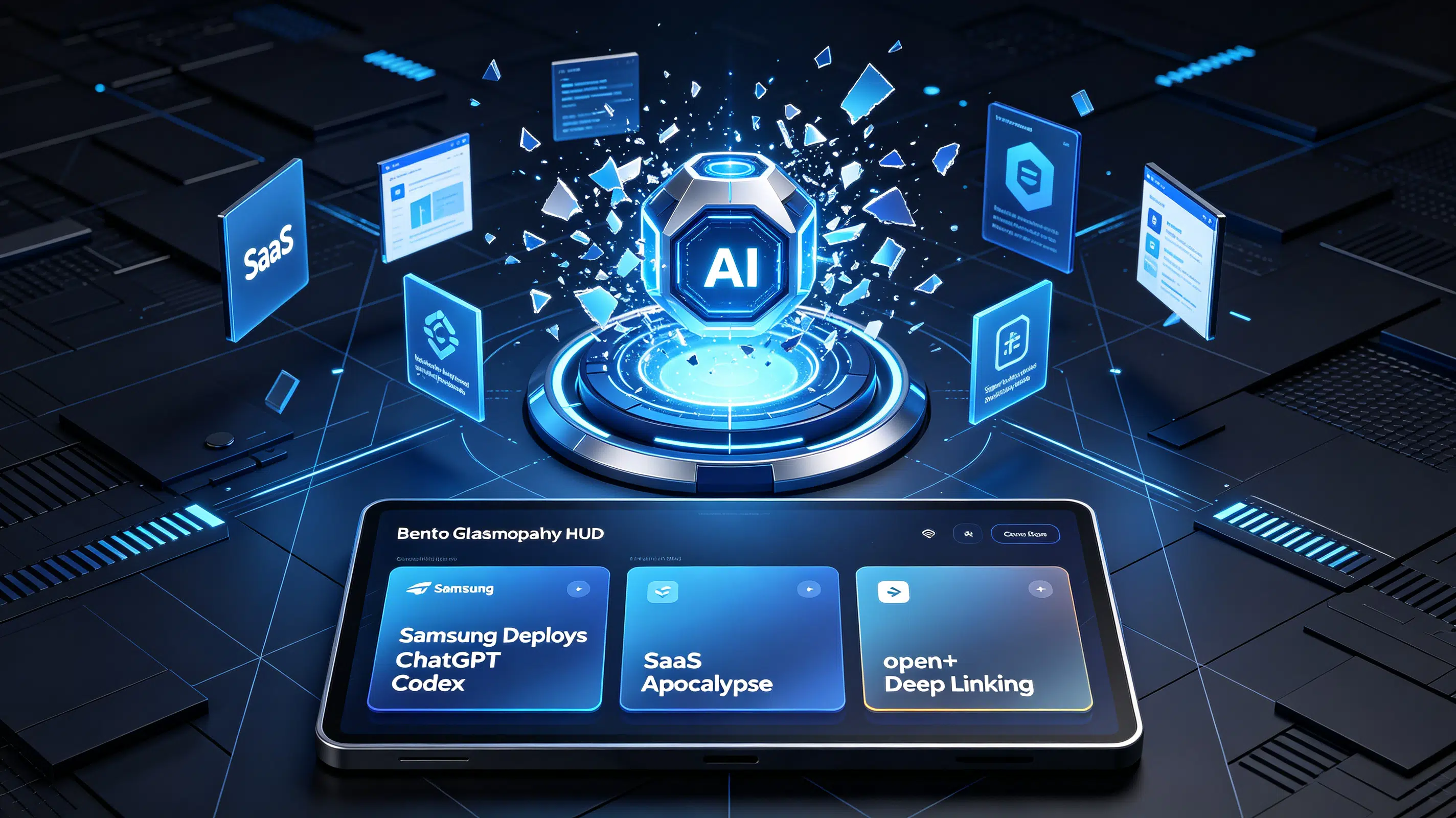
Samsung Deploys ChatGPT Codex? This strategic pivot has been conclusively validated as OpenAI secures its largest enterprise-wide contract to date, confirming that the massive rollout of a native Samsung Deploys ChatGPT Codex framework is officially proceeding. Under this historic agreement, Samsung is bypassing fragmented productivity tools to deliver bulk AI capabilities across its entire global operations. For global software architects and growth leads, this aggressive consolidation indicates that the traditional enterprise software market has hit a strict compliance wall, triggering a massive SaaS apocalypse as single-purpose applications are systematically replaced by a unified, token-backed intelligence layer.
News & Context Breakdown
The Bulk Licensing Model: Analyzing the OpenAI and Samsung Deal
Historically, corporate software purchasing relied on individual seat-based licensing. Businesses allocated separate budgets for document drafting, data analysis, and software development, using different software providers for each task.
Consequently, this fragmented model created massive subscription bloat and bloated corporate software budgets. According to OpenAI’s official announcement, the new agreement bypasses these fragmented systems.
Under the contract, Samsung is deploying ChatGPT Enterprise and Codex to all of its employees in South Korea. Furthermore, the deployment covers all global workers within its Device eXperience (DX) division.
By leveraging its towering valuation, OpenAI negotiated an all-inclusive corporate license that covers hundreds of thousands of employees. This bulk access model drastically reduces the average cost per seat, making single-purpose software solutions economically unviable.
The Unit Economics of Enterprise Tokens: Combating SaaS Margin Squeeze
Specifically, this bulk deployment represents a major shift in the unit economics of corporate software. Traditional SaaS vendors charge a fixed premium per user, regardless of actual software utilization.
Meanwhile, running continuous, multi-agent workflows on independent startups’ servers is incredibly expensive. Intensive API consumption can easily cost companies hundreds of dollars per seat monthly.
By negotiating a direct, enterprise-grade pipeline with OpenAI, Samsung bypasses these third-party markups. The tech giant runs optimized, high-volume queries directly against OpenAI’s infrastructure, which is backed by Samsung’s own advanced memory semiconductors.
Notably, IT Home’s comprehensive reporting highlighted how this reciprocal supply chain partnership keeps operational costs extremely low, protecting corporate margins while maximizing employee output.
The Demise of Single-Purpose Software: How Codex Replaces the Middle Layer
To understand the scale of this SaaS disruption, developers must analyze how Codex is being deployed. While Codex started as a specialized code-writing tool, its utility has expanded far beyond classic software engineering.
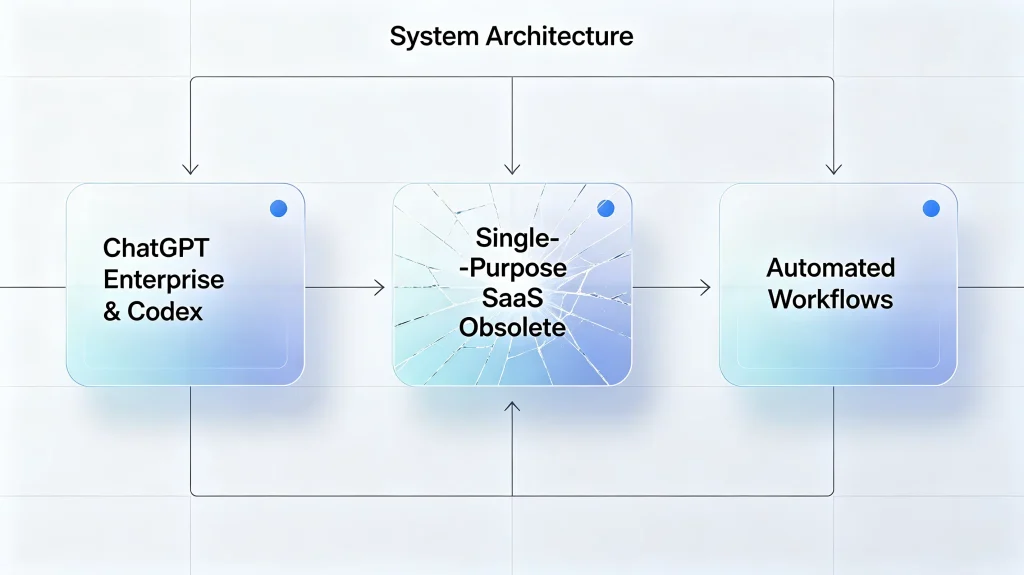
Specifically, Samsung is deploying Codex to non-technical teams across product development, manufacturing, and marketing. An employee with zero formal coding background can describe a workflow in plain language, and the system autonomously compiles a working internal tool or web interface.
Consequently, this capability directly eliminates the need to purchase external middle-layer software. Middle-tier tools for automation, internal data dashboards, and simple forms are rendered obsolete. As Codex active users surpass 5 million weekly, the value of traditional, single-feature SaaS platforms continues to evaporate.
Enterprise-Grade Security and the Sandbox Protection Layer
Naturally, deploying a system-wide AI agent to hundreds of thousands of employees introduces massive data security risks. This concern is especially critical for a hardware leader like Samsung, whose employees handle sensitive product roadmaps and proprietary source code daily.
To address these vulnerabilities, the agreement relies on ChatGPT Enterprise’s strict security controls. Specifically, the system enforces complete data privacy, ensuring that employee queries are never used to train public models.
Furthermore, the architecture integrates directly with Samsung’s internal single sign-on (SSO) and access management systems. This enterprise-grade sandbox ensures that corporate data remains fully protected, preventing unauthorized data exfiltration and maintaining compliance with global standards.
The Disappearing Interface: Bypassing the App Funnel in Agentic Ecosystems
Bypassing the App Discovery Layer
As corporations utilize automated code generation to deploy thousands of internal applications and landing pages, the digital landscape faces a massive product flood. However, this massive increase in software volume coincides with a complete evaporation of the traditional user interface.
When employees use Codex to automate a task, the visual navigation loop disappears. The agent directly queries database APIs and executes the required workflow in the background.
Consequently, we observe a transition from active web browsing to intent-driven execution. Humans no longer navigate through multiple links to complete a task, leaving traditional marketing and discoverability funnels completely bypassed.
The Challenge of Parameters Loss in Agentic Workflows
Traditional analytical tracking depends on browser-level redirections and url query strings. These systems assume a user explicitly clicks a link that records the traffic origin before launching the app.
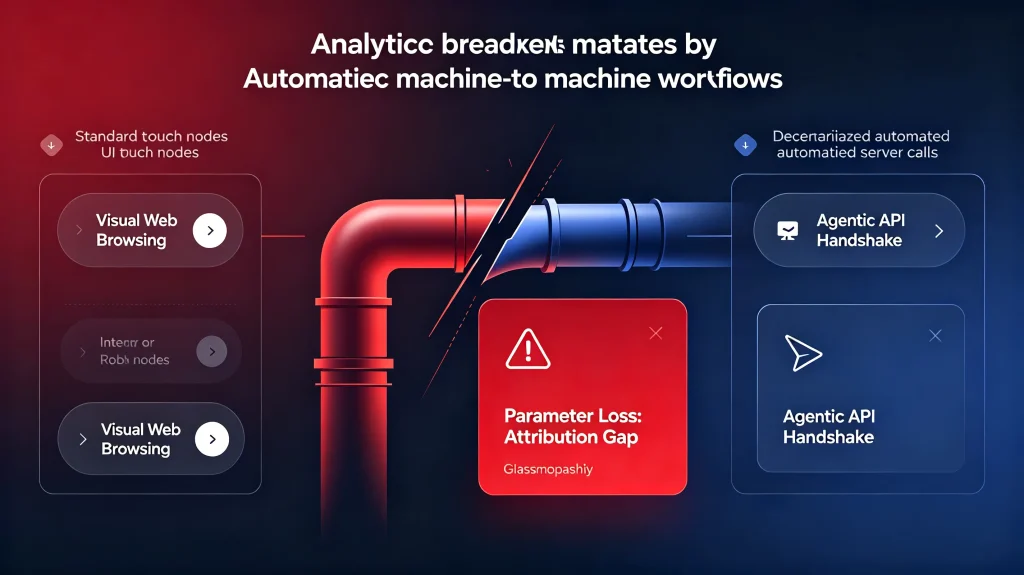
When an AI agent automates the transaction, these redirection mechanics are eliminated. The agent establishes a direct API handshake.
As a result, critical referral parameters and marketing attribution tags are stripped during transit. Mobile measurement platforms receive empty metadata packages. Consequently, developers lose the ability to track the origin of the sale, creating a massive data gap.
Reference Architectures: Restoring Referral Metadata Across Non-Android Runtimes
Rebuilding the Parameter Handshake
To bridge this semantic routing gap, software architects must deploy secure parameter-preservation frameworks. When an external agent invokes an application, it must transmit a verified payload containing the user’s original intent, referral parameters, and security tokens.
Crucially, developers can establish a resilient solution using the Deferred Deep Linking framework. This system ensures that dynamic payload parameters survive background installation loops. Even if the device lacks the native application, the contextual restoration infrastructure preserves the intent payload, passing it securely to the app upon first launch.
Cryptographic Verification for Machine-to-Machine Transactions
Additionally, securing these automated transactions requires strict cryptographic handshakes. Because background agents operate without visual human supervision, malicious scripts can attempt to spoof transaction requests.
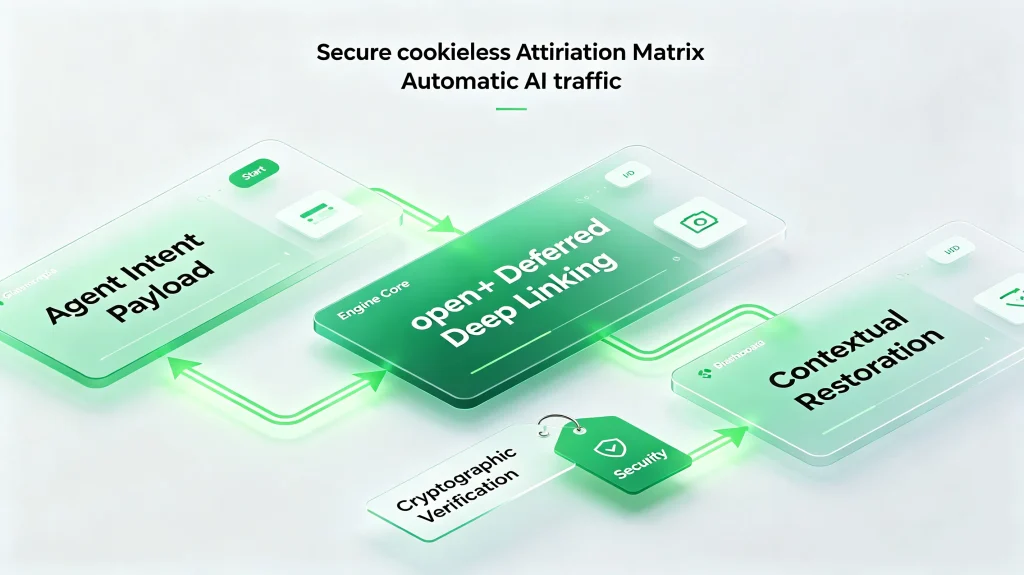
To prevent this, every deep link routing request must carry a verifiable cryptographic signature. The application must validate this signature against public developer registries before executing any action.
Enforcing a secure Deferred Deep Linking framework allows development teams to execute these validations automatically. This process protects the application sandbox from fraudulent installations and secures the transaction pipeline against ad fraud.
Industry Forward-looking Note: Regarding cross-device parameter passing for autonomous intent traffic, opoinstall’s tech lab is currently conducting joint exploratory research with leading enterprise App partners.
Engineering Mandates for Post-Screen Development and Growth
For Developers and System Architects
Integrating a native enterprise AI platform like Codex into the application architecture requires a major shift in development practices. Engineers must transition from designing traditional visual navigation paths to constructing detailed App Intents. These intents allow system-level agents to read app structures and query data programmatically.
Furthermore, developers must implement strict signature verification to validate all incoming deep link payloads. This validation prevents rogue agents from executing local sandbox escapes or triggering fraudulent purchases. Architects must also configure unified multi-platform ID systems to track the user journey across iOS, Android, and HarmonyOS NEXT.
For Product and Growth Managers
Meanwhile, product and marketing leads must redefine their growth metrics. In an agentic environment, traditional KPI metrics like page views, bounce rates, and session lengths lose their value.
Instead, growth leads must optimize for “Intent Capture Rates”. They must ensure their application provides highly structured, machine-readable metadata that agents can parse easily.
Additionally, teams must deploy advanced anti-fraud filters to identify and block automated script-based downloads. This protection is essential to ensure that acquisition budgets are spent on real user growth rather than inflated, machine-generated traffic.
Frequently Asked Questions (FAQ)
Why does the industry need the Samsung Deploys ChatGPT Codex initiative?
Specifically, the industry requires an open standard to bridge fragmented AI registries. Currently, tools and skills are siloed within custom platforms, preventing agents from communicating across organizational boundaries. The open standard provides a standard discovery layer, allowing tools to be securely shared and connected regardless of their underlying provider.
How does the catalog file establish trust under the open standard?
Notably, the system hosts the catalog file directly under the organization’s own domain name. Because the file lives at a well-known path on the domain, ownership of that domain serves as the cryptographic foundation for identity. This setup allows client agents and registries to verify the publisher’s true identity before establishing any runtime connection.
How does agent-driven routing impact mobile app attribution?
Historically, app attribution relied on human clicks and browser-level redirects. When autonomous agents locate and execute tools programmatically, they bypass these visual touchpoints entirely. This bypass strips critical referral parameters during transit, preventing legacy tracking tools from identifying the source of the transaction and triggering an attribution crisis.
Industry Observations
Ultimately, the traditional click-based economy is facing a rapid decline. As payment networks and device operating systems transition to autonomous agentic architectures, the value of software is shifting to the underlying routing layer.
Consequently, building robust, parameter-secure deep linking backbones is no longer a luxury. It is a baseline operational requirement. By preparing your application architecture for the agentic economy today, you ensure your software remains accessible, verified, and profitable in the post-screen era.